As many families know, learning doesn’t just happen when children are in school. It happens every day, as families talk, read, and explore the world around them. But studies show that if kids don’t keep learning during the summer, they can forgot a lot of what they learned during the school year. Children from low-income families are more likely to have “summer learning loss,” but all kids are more likely to lose ground on math and spelling than other skills.
“Over the summer children lose what they’ve learned, if they are not maintaining some sort of brain activity other than sitting in front of the television or playing video games,” says Alferma Crawford, coordinator for Oakland’s 17 Head Start sites, “But if you keep them engaged in something constructive, it’ll be easier for them to continue where they left off when they go back to school.”
Families and parent educators offer tips for summer activities that keep kids learning.
Help children practice what they learn in school
“Children learn what you teach them,” says Crawford, “and most of that takes place (at) home because that’s where they spend most of their time. Whatever we do at school, we want parents to continue doing at home.” Let your child know that school and learning are important. During the school year, talk with your child about what they’ve learned at school and look at the work they bring home.
Toward the end of the school year, talk with your child’s teacher to find out what your child should work on over the summer, says Andrea Jones, mother of five children and grandmother of two. “Parents have to be proactive—they have to reach out to teachers. We live in Long Beach so there’s a lot of year-round teachers out here. When kids are off for a break, teachers send things home for kids to do.”
Explore your child’s interests
If your child is interested in cars and trucks, you can count cars, describe cars, draw cars, learn to write the names of cars. You can count to ever-higher numbers of cars. You can notice shapes: round headlights, rectangular windows, oval mirrors. “Every child learns differently,” says Crawford, “but for all kids, repetition is key.”
Encourage reading
“We read a lot,” says Jones. “(My grandson) had booklets supplied by his teacher. I’d be reading my book and he’d be reading his next to me. After he read his I’d let him read mine, and a lot of times he’d get it all right and it made him feel really good. You don’t stick ‘em in a corner and tell them ‘go read this,’” says Jones. “We’re doing it together.”
You don’t have to read well—or at all—to help young children enjoy books. You can talk about the pictures and tell each other stories.
Create everyday learning opportunities
“Every activity that you do—even cleaning the house—you can include your child,” says Lidia Perez, a recent immigrant from El Salvador whose daughter, Lydia, starts kindergarten in the fall. “I am always talking to her and she wants to share things with me,” says Perez. “She’ll say, ‘Mommy, look at this flower!’ and I’ll say, ‘Yes, what color is it?’”
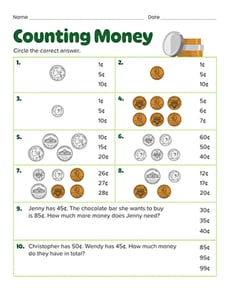
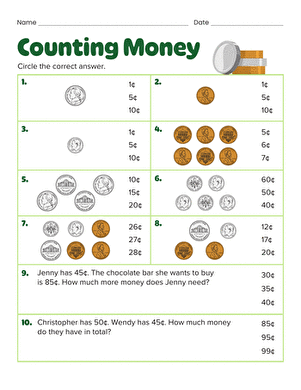
“When we go to the supermarket,” she adds, “we count how many of everything—like tomatoes—we’re going to put into the bag.” On the street, they count trees. You can also teach children the names of coins and how much they’re worth or help children figure out how much older you are than your child.
Set aside time to practice skills
“You can take old homework and recycle it,” says Jones. When her grandson was struggling in first grade last year, the family rallied around to help him. They put sticky notes on furniture at eye level around the house to help him drill spelling words. “It made it fun—we turned it into a game,” says Jones.
They used to have him do his homework in the kitchen, away from the television, but then he was working on it alone. So as part of helping him with school, the family cut back on TV-watching and Jones sat with him as he worked on his homework.
She also saved his work to help him study over the summer, she says. “Ask them in the car, how to spell this or what's this plus that.” If you’re helping them with their schoolwork all along, and talking to their teachers, too, “you don't even have to have it in front of you to know what they're doing,” she adds.
“When there's an adult working with him, helping him, it makes the experience a whole lot better,” she says. “You gotta say ‘We're going to do better next time,' or 'We need to practice.’ You have to find what works for you and your child.” Now her grandson is thriving in school, she says.
Provide drawing and writing supplies
Make sure that your child has books, paper, and writing tools at home. When young children practice writing and drawing at home, it helps develop their hand muscles and gets them in the habit of doing school-type work. Many Head Starts and schools will create summer packets for children with art supplies and activities for families to do together. Perez says Lydia “loves drawing. She always draws pictures of our family and they are kind of funny, but they are of us.”
Visit your library
Many libraries host free events, such as read-aloud times and puppet shows. Some have summer reading programs where children get small rewards for reading several books. Libraries also have listings for free community events like outdoor concerts or farmer’s markets.
Perez says she enjoys library trips with her daughter. “Most of the time she gets two or three books and we read them to her at home,” says Perez. Lydia has memorized some books and ‘reads’ them to her mother.
Make use of community resources
Belkis Gowhary—who was a Head Start parent (her boys are 18, 16, and 10) and now works as a family advocate in Alameda’s Head Start program—remembers taking her boys to parks and library story times. “It was fun for me because I was eager to learn more about what’s going on around me,” said Gowhary, originally from Afghanistan. “For parents who don’t speak English, we encourage them to take classes at the adult school,” she adds.
“I gather resources for the parents for the summer,” says Oakland Head Start Family Advocate Claudia de la Cruz, including activities “from Parks and Rec, the police department, the YMCA, the Girls and Boys Club.”
“As a mother I think that every time you have with a child is important,” says Perez. “Even if it’s just a few minutes. Children understand so many things.”
Resources
Add your own comment