Education.com

Technology Materials, Creative Thinking, Play, and the Arts

By J.P. Isenberg|M. R. Jalongo
Pearson Allyn Bacon Prentice Hall

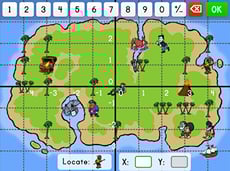
Technology is changing the availability of materials and resources for creative thinking, play, and the arts. It has given teachers and children access to works of art from all historical periods and across many cultures, opportunities to explore inventions, and information through searches and Web quests. The Internet, in particular, has made whole museum collections widely available to students and teachers (Arts Education Partnership, 2004a). Teachers today use various technologies such as CD-ROM encyclopedias, computers and calculators, digital sound and visual image recording, and the Internet to promote creative thought and to integrate play and the arts across disciplines (March, 2004). Technological materials can invite new ways of playing and expressing ideas. They are tools that enable children to create and control their own playful microworlds; they invite fantasy creations by the imaginative child and enable children to play with real-world items, such as musical instruments, works of art, dolls, and story characters (Arts Education Partnership, 2004a; Swaminathan & Wright, 2003).

Technology materials that promote creative thought are appropriate for all children. Research (Haugland, 2001) shows that creativity is significantly diminished in children who use drill-and-practice software for just 45 minutes per week. All adults who work with children and computers, an example of one kind of technology, need to know how to choose and use software that facilitates children’s creative and artistic expression as well as their own roles in facilitating children’s learning with computers.

Appropriate Software

Certain features of software design promote children’s playful and imaginative experiences. Some of these include a simple design that has many possibilities, clear instructions so that children can use the program with little adult involvement, and easy access to and exit from the program (NAEYC, 1996b). Software that meets the needs and interests of children and enhances their creative thought and artistic expression enables them to do the following:

  1. Discover, invent, and control their symbolic world. When children play with technology, they have many opportunities to determine the outcome of their play through the use of various symbols. Computer drawing programs such as Color Me, Crayola Make a Masterpiece, and Delta Draw encourage discovery as children experiment with the fill features, change and overlay colors and backgrounds, and invent stories about their creations. And virtual reality programs such as I Can Be a Dinosaur Finder, in which children become paleontologists, can provide rich symbolic experiences (Haugland, 2001).
  2. Apply a range of skills and abilities. Some software materials require children to use a very simple set of skills (such as matching and rhyming skills in Reader Rabbit) as opposed to the use of strategic thinking required in more open programs such as paint programs or Kid Works 2. Programs like Millie and Bailey’s Preschool use trial-and-error testing to match the right shoes to different-sized feet of customers. More open-ended software encourages children’s exploration and self-directed learning that helps them control the pace of their own learning. Software such as Thinkin’ Things Collection 3 for older children, in which children draw a design on a two-dimensional rectangle that instantly appears in 3D as a spinning shape, focuses on the development of “visual thinking.” The more time children have to explore possibilities with this program, the more intriguing the mental puzzles become to solve.
  3. Enhance children’s social interactions. Quality educational software is fun and easy to use, has several levels of difficulty, and encourages children to work together. In Ms. Hicks’s preschool classroom, different animals fascinated the children, so she added the program Fantastic Animals to the computer center. In pairs or triads, the children playfully selected a body, head, tail, and legs to create an animal that danced across the screen. Ms. Hicks noticed that the children were also using Delta Draw to create their own fantastic, mixed-up animals. Some of the children even invented pretend scenarios for their animals. Other open-ended software for young children that fosters social interaction includes Millie’s Math House, where children construct a mouse house together and take turns choosing shapes, and Facemaker, which enables children to create limitless kinds of faces.
  4. Foster inquiry learning and problem solving. Computer materials that promote inquiry and problem solving provide children with possibilities for gathering information, making decisions, generating creative ideas and solutions, and testing their plans and solutions. Software that enables children to “build” their own stories by selecting particular backgrounds, icons, or characters is powerful for all children because it capitalizes on children’s divergent thinking and brings a story to life. With a simple click of the mouse, children can change a story’s preset animals, characters, or objects to those of their own inventions. In Wiggins in Storyland, for example, young children can explore Wiggins the bookworm’s living room, play tic-tac-toe on Wiggins’s windows, hear classic stories read aloud, and make a snack for Wiggins to drink. Older children enjoy creating their own different story endings for web stories by exploring software such as Create Your Own Adventure with Zeke (Swaminathan & Wright, 2003). In Oregon Trail, older children find themselves having to problem-solve survival issues by deciding how to equip their wagons with limited funds. Problem-solving software has limitless possibilities and fosters children’s mental flexibility.
  5. Make connections to their thematic units. During dental health week, one second-grade teacher introduced the software program Color Me for the children to create bright illustrations for their original stories about healthy teeth. The second graders created scenic backgrounds and characters to illustrate their texts about toothbrushes as part of their study. Other programs like Cubby Magic: Folk Tales Around the World use native adults to share stories, which can be read with and without rebus pictures. Children can also make their own illustrations or use rebus pictures to interpret multicultural ideas. The challenge for teachers is to choose software that enables children to explore possibilities within a technological world (Yelland, 1999).
View Full Article

Add your own comment

Ask a Question

Have questions about this article or topic? Ask
Ask
150 Characters allowed

Today on Education.com

WE'VE GOT A GREAT ROUND-UP OF ACTIVITIES PERFECT FOR LONG WEEKENDS, STAYCATIONS, VACATIONS ... OR JUST SOME GOOD OLD-FASHIONED FUN!

We've got a great round-up of activities perfect for long weekends, staycations, vacations ... or just some good old-fashioned fun! Get Outside! 10 Playful Activities