
Activity
Stack Coins for Integer Action!

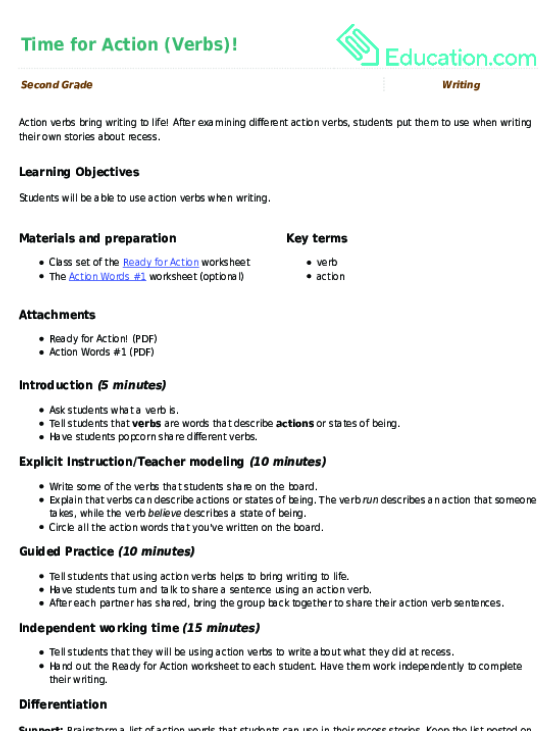
Positive and negative whole numbers, called integers, can pop up anytime, anywhere in middle school math. Understanding how to add and subtract integers can be a challenge at first, but once you know how to handle the heat, it's a breeze! Remember when your middle schooler was a kindergartener and learned 2+2=4 using Cheerios? The same idea can be used with integers, however the Cheerios are now coins and the process requires a couple more steps!
Related learning resources
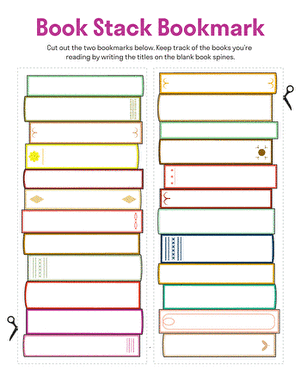
Book Stack Bookmark
Worksheet
Book Stack Bookmark
Watch the titles of books you've read stack up with these delightful reading tracker bookmarks!
6th Grade
Worksheet

Ready for Action!
Worksheet
Ready for Action!
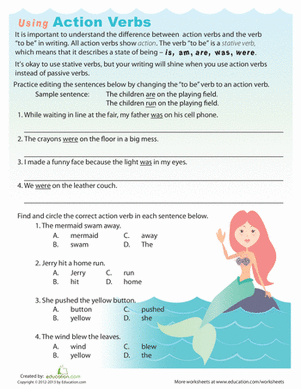
Action words make writing pop! Through this activity, your second graders will practice using action verbs to tell an engaging story about what they did at recess.
2nd Grade
Worksheet
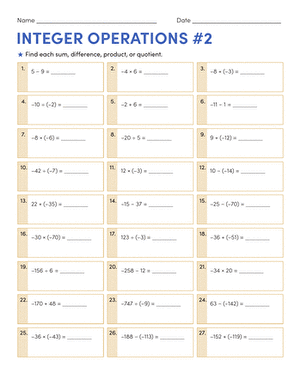
Integer Operations #2

Interactive Worksheet
Integer Operations #2
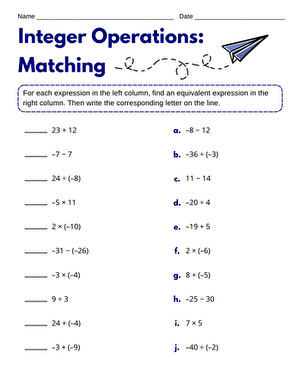
Give students a chance to further hone their knowledge of integer operations with Integer Operations #2!
7th Grade
Math
Interactive Worksheet