
Activity
Make Your Own Electricity

By now, your fifth grader has probably heard of atoms. They're the smallest particle of a chemical element that can take part in a chemical reaction without being permanently changed. They're also made up of protons and neutrons in a central nucleus surrounded by electrons. Sound familiar?
Sometimes, a large number of atoms in an object will gain or lose electrons (negatively charged subatomic particles that are found at varying distances from an atom's nucleus). When this happens, the entire object takes on an electric charge. The term static electricity describes situations where objects carry electric charge. And by using static electricity generated from her body, a child can cause a small fluorescent lamp bulb to light up!
Related learning resources

Make Your Own Comic
Worksheet
Make Your Own Comic
Show your fifth-grader it's possible to make your own comic rather than just read them. He'll work on creative writing while he's at it!
5th Grade
Worksheet
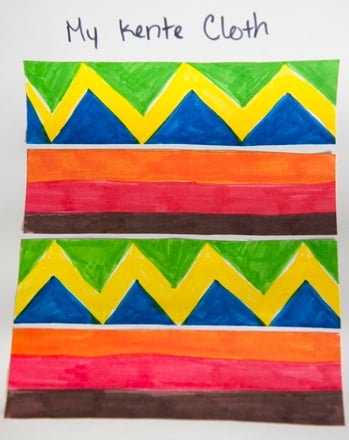
Make Your Own Kente Cloth
Activity
Make Your Own Kente Cloth
Celebrate Black History Month by having your child make her own version of a kente cloth after learning what the different colors on a kente cloth symbolize.
3rd Grade
Social studies
Activity
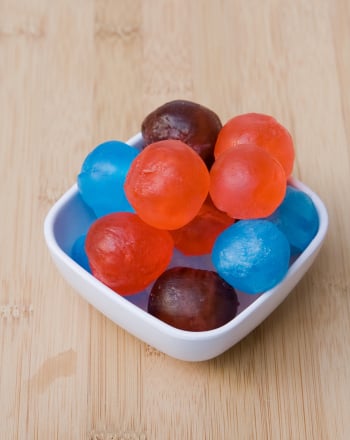
Make Your Own Soap
Activity
Make Your Own Soap
Encourage your child to think outside the bathtub by making her very own handmade soaps! Perfect as a present, a decoration, or just to pamper herself.
4th Grade
Science
Activity