What is the CAHSEE?
State law, enacted in 1999, authorized the development of the California High School Exit Examination (CAHSEE), which students in California public schools would have to pass to earn a high school diploma. All California public school students must satisfy the CAHSEE requirement, as well as all other state and local requirements, in order to receive a high school diploma. The CAHSEE requirement can be satisfied by passing the exam or, for students with disabilities, receiving a local waiver pursuant to Education Code Section 60851(c), or receiving an exemption pursuant to Education Code Section 60852.4.
The purpose of the CAHSEE is to improve student achievement in high school and to help ensure that students who graduate from high school can demonstrate grade-level competency in reading, writing, and mathematics.
What subjects does the CAHSEE cover?
The CAHSEE consists of two parts: English-language arts (ELA) and mathematics. Test questions address California content standards that a High School Exit Examination Standards Panel, appointed by the State Superintendent of Public Instruction, determined students should know to graduate from high school.
English-Language Arts
The ELA part of the exam, which addresses state ELA content standards through grade ten, has a reading section and a writing section. The reading section covers vocabulary, informational reading, and literary reading. This section includes 50 percent literary texts and 50 percent informational texts. The writing section covers writing strategies, applications, and conventions. The ELA part of the exam consists of multiple-choice questions as well as a writing task in which students are asked to write on a specific topic or in response to a literary or informational passage.
Mathematics
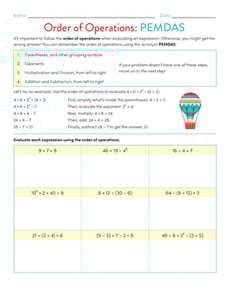
The mathematics part of the CAHSEE addresses state mathematics content standards through the first part of Algebra. It includes statistics, data analysis and probability, number sense, measurement and geometry, algebra and functions, mathematical reasoning, and Algebra I. Students must demonstrate computational skills and a foundation in arithmetic, including working with decimals, fractions, and percentages. The math part of the exam is composed entirely of multiple-choice questions.
The CAHSEE blueprints provide more information on the content of the exam and are available on the California Department of Education (CDE) Web site.
Are there any exemptions or waivers of the requirement to pass the CAHSEE?
For certain students with disabilities, an exemption or waiver of the CAHSEE requirement may be available.
Education Code Section 60852.4 provides an exemption of the requirement to pass the CAHSEE for students with disabilities scheduled to receive a diploma on or before December 31, 2007 if the following conditions are met:
- The student has an operative individualized education program (IEP) adopted pursuant to the federal Individuals with Disabilities Education Act or a plan adopted pursuant to Section 504 of the federal Rehabilitation Act of 1973.
- The IEP or Section 504 Plan of the student, which is dated on or before July 1, 2006, indicates that the student has an anticipated graduation date, and is scheduled to receive a high school diploma on or before December 31, 2007.
- The school district or state special school certifies that the student has satisfied or will satisfy all other state and local requirements for the receipt of a high school diploma on or before December 31, 2007.
- The student has attempted to pass the CAHSEE sections not yet passed at least twice after grade ten, including at least once during the current grade twelve year of the student, with the accommodations or modifications, if any, specified in the IEP or Section 504 Plan of the student.
- Either (i) the student received remedial or supplemental instruction focused on the CAHSEE sections not yet passed from his or her school, private tutoring, or another source, or (ii) the school district or state special school failed to provide the student with the opportunity to receive that remedial or supplemental instruction.
- If the student received remedial or supplemental instruction as described in item 5, the student has taken the CAHSEE sections not yet passed at least once following the receipt of that remedial or supplemental instruction.
- No later than 30 days prior to the receipt of a diploma in 2007, the student, or the parent or legal guardian of the student if the student is a minor, has been notified in writing that the student is entitled to receive free appropriate public education up to and including the academic year during which the student reaches the maximum age pursuant to Education Code Section 56026(c), or until the student receives a high school diploma, whichever event occurs first.
Education Code Section 60851(c) permits local school boards to grant a waiver of the CAHSEE requirement to students with disabilities who take the CAHSEE using modifications and receive the equivalent of a passing score.
At the request of the student’s parent or guardian, a school principal must submit to the local school governing board a request for a waiver of the requirement to pass the part(s) of the CAHSEE on which a modification was used and the equivalent of a passing score was earned. For the local board to waive the CAHSEE requirement, the principal must certify that the student has met the following conditions:
- An IEP or Section 504 Plan is in place that requires the accommodations or modifications to be provided to the student when taking the CAHSEE.
- The student has either satisfactorily completed or is in progress towards completing high school level curriculum sufficient to have attained the skills and knowledge otherwise needed to pass the CAHSEE.
- The student has an individual score report showing that the student has received the equivalent of a passing score on the CAHSEE while using a modification.
What is done to assist students with disabilities when taking the CAHSEE?
CAHSEE regulations specify accommodations and modifications that students with disabilities must be permitted to use if specified in the student's IEP or Section 504 Plan for use on the CAHSEE, standardized testing, or for use during classroom instruction and assessments. An accommodation is a change in the testing environment or process that does not alter what the CAHSEE measures or affect the comparability of scores, whereas a modification is a change that fundamentally alters what the CAHSEE measures or affects the comparability of scores.
Students who use an accommodation and earn a score of 350 or higher have passed that part of the CAHSEE. Students who use a modification and earn the equivalent of a passing score on one or both parts of the CAHSEE have not passed but may be eligible for a waiver of the CAHSEE requirement (as described above).
What is done to assist English learners when taking the CAHSEE?
English learners must be permitted to take the CAHSEE with certain test variations if used regularly in the classroom. For example, if regularly used in the classroom, English learners must be permitted to hear the test directions in their primary language or use a translation glossary.
Students who are English learners are required to take the CAHSEE in grade ten with all other grade ten students. During their first 24 months in a California school, English learners are to receive six months of instruction in reading, writing, and comprehension in English (Education Code Section 60852). During this time, they are still required to take the CAHSEE.
When do parents and guardians receive their student’s CAHSEE results?
About eight weeks after each administration of the exam, school districts receive two copies of the CAHSEE Student and Parent Report for each student who took the examination. When school districts receive these reports, they are to immediately distribute one copy to parents and guardians and place the other copy in the student’s permanent record.
Do parents and guardians need to keep a copy of their student’s results?
Yes. It is important that parents and guardians keep a copy of the student report for their own records. The CDE does not keep a copy of individual student reports. Individual student scores are to be maintained by the student’s school district. The school district must ensure the records are maintained confidentially. (See Education Code Section 49073 and Title 20 United States Code Section 1232[g].)
How many opportunities do students have to pass the CAHSEE?
All students are required to take the CAHSEE for the first time in grade ten. Students who do not pass one or both parts of the exam in grade ten have up to two opportunities in grade eleven and up to three opportunities in grade twelve to retake the part(s) of the exam not yet passed. The CAHSEE testing schedule for the 2007–08 school year is posted on the CDE Web site. School districts select their testing dates from this schedule.
What happens if students do not pass the CAHSEE?
School districts are required to provide additional instruction to assist students who do not pass the exam. Parents and guardians are encouraged to contact their student’s school for information on the programs offered.
Is the CAHSEE used for school and school district accountability purposes?
Yes. The state and federal governments use the CAHSEE as a measure of school and school district accountability. The state accountability program is the Public Schools Accountability Act, and the federal accountability program is the No Child Left Behind Act. The use of CAHSEE results for these accountability programs in no way affects how the CAHSEE is used for individual student accountability.

How can parents and guardians get their questions answered about the CAHSEE?
Additional CAHSEE information is posted on the CDE Web site. Parents and guardians should direct their questions to their student’s teachers or contact the school principal or counselor.
View Full Article