Education.com

Helping Your Child Learn History - Activities: History as Time (page 3)

U.S. Department of Education

Put Time in a Bottle

Kindergarten - Grade 3

Collecting things from their lifetimes and putting them in a time capsule is a history lesson that children will never forget.

What You Need

Magazines or newspapers
Sealable container
Camera
Tape or other sealant

What to Do
  • Talk with your child about time capsules. Explain that when buildings such as schools, courthouses and churches are built, people often include a time capsule - a special container into which they place items that can tell about their lives and times to future generations who open the container.

    • Tell your child that you want to help him make his own personal time capsule. Talk with him about what he might want to put in it. Ask, for example, what things he might include to give people of the distant future a good idea of what he was like and what the time he lives in was like.
    • Have him use a simple camera to take pictures of a few important objects in his life - a favorite CD, poster or pair of shoes; a baseball bat, football jersey or basketball; his computer, music player or cell phone. Have him locate and add magazine pictures of games and toys; cars, airplanes and other types of transportation; different kinds of sporting events; and clothes. Next have him locate examples of slang, ads for movies and TV shows, and selections from important speeches, poetry and stories or novels. Also help him find stories about current heroes and local, national and world events; and accounts of current issues and crises. Finally have him write a letter to someone in the future that describes life today.
    • Call the family together and have your child do a "show and tell" of the items he's collected.
    • Once everyone is satisfied with the collection, help your child label the items with his name and with any other information that will help those who find them understand how they are significant to the history of our time.
    • Have him place the items in a container, seal the container and find a place to store it.
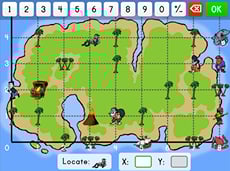
    • Have him write in his history log a short description of what he has done and record the date. Encourage him to draw a map that shows the location of the time capsule and to use the correct directional words to label it.
  • Try to find news stories (your local newspaper, library or local historical society or museum can often direct you to such stories) about the opening of such a capsule in your area and what was in it. If possible, take your child to look at the contents of an opened time capsule- perhaps at your local historical society or museum. Also try to locate buildings in your area that contain unopened time capsules. Take your child to see the buildings and point out the cornerstones - the places in which most capsules are placed. Talk with him about the information on the cornerstone.
Let's Talk About It

Ask your child: What did the collection of items tell you about the period in which we live? Did the items tend to be of a certain type?

Quill Pens & Berry Ink

Grades 1-3

History depends on writing, and writing has changed over time from scratches on clay to digitalized codes and letters.

What You Need

For quill pen:
   feather, scissors, a paper clip

For berry ink:

    1/2 cup of ripe berries (blueberries, cherries, blackberries, strawberries, or raspberries work well), 1/2 teaspoon salt, 1/2 teaspoon vinegar, food strainer, bowl, wooden spoon, small jar with tight-fitting lid

Paper
Paper towels

What to Do
  • Place the berries in the strainer and hold it over the bowl. Have your child use the wooden spoon to crush the berries against the strainer so that the juice drips into the bowl. When all the juice is out of the berries, throw the pulp away. Tell your child to add the salt and vinegar to the berry juice and stir it well. If the ink is too thick, have him add a teaspoon or two of water (not too much or he'll lose the color). Help him to pour the juice into a small jar and close it with a tight-fitting lid. (Note: Make only as much ink as you will use at one time, because it will dry up quickly.)

  • Have your child watch as you form the pen point by cutting the fat end of the feather on an angle, curving the cut slightly. (Note: A good pair of scissors is safer than a knife. But play it safe, and always do the cutting yourself.) Clean out the inside of the quill so that the ink will flow to the point. Use the end of a paper clip if needed. You may want to cut a center slit in the point; however, if you press too hard on the pen when you write, it may split.

  • Give the quill pen to your child and tell him to dip just the tip in the ink. Keep a paper towel handy to use as an ink blotter. Allow him to experiment by drawing lines and curves and by making designs and single letters. Show him how to hold the pen at different angles to get different effects.

    • Have him practice signing his name, John Hancock style, with the early American letters shown below. Then have him write his signature in his history log.
    • Have him write his name again, using a pen or pencil. Talk with him about how the signatures are alike and different.
Let's Talk About It

Ask your child: Why do we write? When do people in our family use writing? What written things do you see every day? What are their different purposes? What effect do different writing tools have on writing, for example quill pens, ballpoint pens, typewriters and computers?

View Full Article

Add your own comment

Ask a Question

Have questions about this article or topic? Ask
Ask
150 Characters allowed

Today on Education.com

WE'VE GOT A GREAT ROUND-UP OF ACTIVITIES PERFECT FOR LONG WEEKENDS, STAYCATIONS, VACATIONS ... OR JUST SOME GOOD OLD-FASHIONED FUN!

We've got a great round-up of activities perfect for long weekends, staycations, vacations ... or just some good old-fashioned fun! Get Outside! 10 Playful Activities