Edutainment
The new generation of children has been named the game generation. This game generation is accustomed to a high speed, parallel processing, active, fantasy world. Games have changed the learners’ cognitive skills so that the game generation can process a lot of information at the same time. Video games are an excellent learning tool because the computer can adjust its difficulty according to the player’s preference or need. Video games also teach deductive reasoning, memory strategies, and eye-hand coordination. Working together with software companies, parents, and educators, video games can facilitate children learning the required content for their level as well as make learning fun and applicable to the game generation children. As a result, educators must be willing to learn how to use educational games as a part of constructivist learning in education.1
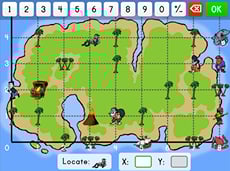
Some off-the-shelf games such as Sim City or Rollercoaster Tycoon, which contain model economies, are being used in education. By playing them it is possible to understand how such models work, and to deduce what their biases are. (In Sim City, for example, in which the player assumes the role of a city mayor, no amount of spending on health care is ever enough to satisfy patients, and the fastest route to prosperity is to cut taxes.) Such games are not only educational but entertaining (hence the neologism “edutainment”) allowing kids to learn valuable skills and knowledge under the disguise of a game. Successful edutainment is discernible by the fact that learning becomes fun and teachers or speakers educate an audience in a manner which is both engaging and entertaining. More than ever before, video games have lifted the standards by which children judge the value of their learning experiences both in front of their televisions and in the classroom. Teachers know this as they sometimes feel pressured to compete with the alluring experiences provided by common video games. As a teacher myself, I can tell you that it sometimes feels as if the only way that students will pay attention is if I provide them with activities that lead to an outer body experience, nothing less. As a parent, like any parent, I want to support video game play among my children that leaves them with increased and relevant knowledge and skills. I want them to, as much as possible, “learn and earn” while still having a good time. So how is this already being accomplished? Here are a few of many examples of what is being used and where to get them:
- Tim Rylands, a British teacher in a primary school near Bristol, recently won an award from Becta, a government education agency, for using computer games in the classroom. By projecting the fantasy world of “Myst”, a role-playing game, on to a large screen and prompting his 11-year-old pupils to write descriptions and reactions as he navigates through it, he has achieved striking improvements in their English test scores.2
- EduProfix is a computer game based on driving cars. You have to drive through the right answer in addition to get through. Developers meant this game for younger children who aren’t able to learn from lists on paper (see http://www.eduprofix.com/).
- The Learning Company® sells education software for preschool through high school (see http://www.learningcompany.com/). Here you will find well-trusted brands such as Reader Rabbit® software, Mavis Beacon® software, ClueFinders® software, Kid Pix® software, Adventure Workshop® software and many more.
- A time-tested favorite, Storybook Weaver Deluxe inspires and motivates students to author and illustrate their own multimedia story with an easy-to-use word processor and variety of graphic tools. Story ideas that range from fantasy adventures to personal events to historical fiction, and an extensive array of multicultural images from around the world, make Storybook Weaver Deluxe the perfect tool for a wide range of cross-curricular projects. It’s also bilingual, so students can write and hear their story’s text read aloud in either English or Spanish (http://tinyurl.com/2km2w5).
- VTech, the creator of the Electronic Learning Products (ELP) Category, is a world leader of age-appropriate learning toys. Since 1976, VTech has been developing high-quality, innovative educational products for children from birth to preteen that deliver “smart play” through the combination of entertaining electronic formats and engaging, age-appropriate content that help children learn while having fun (http://www.vtechkids.com/).
- Wild Earth sends players of all ages on a breathtaking safari through the plains of Africa. Their mission: to explore the wild and capture on film the essence and beauty of the natural world around them. Your photos become an integral part of articles that are created from your own experiences! (http://www.wildearthgame.com/).
- TeAch-nology - The Art and Science of Teaching with Technology® - represents a vision of teaching in a world driven by technology. The organization’s mission is to provide services designed to support educators’ in effectively incorporating technology in teaching and learning. Their goal is two-fold: to provide a reservoir of online resources for educators to access at any time and to provide effective tools for designing instruction that are time and energy saving. (http://www.teach-nology.com/downloads/)
- The Incredible Machine: Even More Contraptions gives players dozens of tools that perform an action: balls that bounce, cats that chase (and don’t bounce), pulleys, ropes, generators, and yes, mandrill baboons on conveyer belts, bananas a-dangle in front of them. Then players are given a problem to solve with all of this crazy energy. Here’s an example: in one puzzle called “Wood is Good,” players must get three balls into a box, make wooden toast, and wood-smoke a hunk of Gouda cheese for a mouse. Among the tools available to accomplish this task are a bike pump and an antigravity pad. And this is one of the easy puzzles. There are 250 gizmos to build here, some designed for single players and some designed for head-to-head puzzling competition. There is also a field where players can design their own Rube Goldberg Machine from scratch. The vast amount of projects and their complexity make this a program with staying power. (http://tinyurl.com/2nhubx).
-
1
- 2
Add your own comment
Ask a Question
Have questions about this article or topic? AskToday on Education.com
WORKBOOKS
May Workbooks are Here!
WE'VE GOT A GREAT ROUND-UP OF ACTIVITIES PERFECT FOR LONG WEEKENDS, STAYCATIONS, VACATIONS ... OR JUST SOME GOOD OLD-FASHIONED FUN!
Get Outside! 10 Playful Activities
Popular Articles
- Kindergarten Sight Words List
- The Five Warning Signs of Asperger's Syndrome
- What Makes a School Effective?
- Child Development Theories
- Why is Play Important? Social and Emotional Development, Physical Development, Creative Development
- 10 Fun Activities for Children with Autism
- Test Problems: Seven Reasons Why Standardized Tests Are Not Working
- Bullying in Schools
- A Teacher's Guide to Differentiating Instruction
- Should Your Child Be Held Back a Grade? Know Your Rights