
Activity
How Does Smell Affect Taste?

Both your sense of smell and sense of taste detect chemicals. Your tongue is covered with about 10,000 taste buds, which detect five different kinds of tastes: salty, bitter, sweet, sour and umami. Umami, discovered by the Japanese, means delicious in that language. Umami taste buds detect savory flavors. You also have some taste buds on the roof of your mouth and inner surface of your cheeks. The chemical receptors involved in your sense of smell are located in a postage stamp-sized patch of nerve cells called the olfactory tract located at the roof of each nasal cavity. These receptors can detect up to a thousand different types of chemicals.
Have you ever noticed how food tastes different when you have a cold? Smell and taste are definitely connected. Let’s investigate.
Problem
How does smell affect taste?
Materials
- 15 volunteers, none of whom are allergic to any of the foods you are giving them. You might ask about strawberries especially.
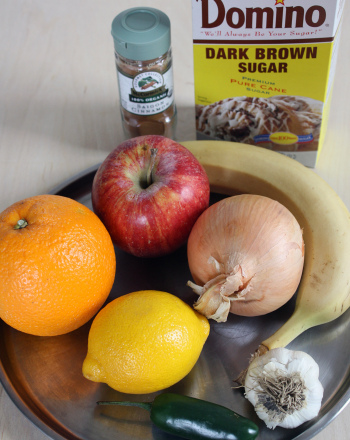
- Assortment of fruit
- Knife
- Cutting board
- 3 large plates
- Q-tips
- Essential oil of peppermint
- Clipboard
- Pencil
- Plain crackers
- Water
- Cups
Procedure
- Before you start your experiment, make sure that each of your volunteers is aware that he or she is participating in an experiment related to smell and taste. Ask about any allergies to fruit or peppermint oil.
- Create a data table you can fill in quickly as you test each volunteer. Make a copy for each volunteer (see example below).
|
Fruit |
Peppermint Oil |
Nose plugged |
Control |
|
Strawberry |
|
|
|
|
Pear |
|
|
|
|
Kiwi fruit |
|
|
|
|
Tomato |
|
|
|
|
Banana |
|
|
|
|
Watermelon |
|
|
|
|
Apple |
|
|
|
- Chop the fruit into bit-sized pieces. You need three pieces of each kind of fruit for each volunteer.
- Stick a toothpick in each piece of fruit.
- Make sure all different types of fruit are cut into pieces of the same size and that there are no pieces of fruit skin or seeds.
- Make piles of each type of fruit on each of the three plates.
- For one plate of fruit, use the cotton swab to dab a drop of peppermint oil on each piece of fruit.
- Do not let your volunteers see the plates of fruit. Also, they will need to shut their eyes or be blindfolded throughout the experiment.
- Test each volunteer separately.
- Start with the fruit with peppermint oil on top. Hand your volunteer a piece of fruit. Give her 3 seconds to identify the fruit. If she identifies the fruit correctly, put a check mark on the data table with her name. If she can’t identify the fruit or identifies it incorrectly, mark a 0 on her chart.
- After testing everybody with peppermint oil covered fruit, give each volunteer some time to rest, drink a glass of water, and eat a couple crackers.
- Repeat the experiment, this time asking your volunteers to close their eyes and hold their noses as they taste each fruit.
- Again, give your volunteers a rest before you do the final trial.
- For the next trial, your volunteers just need to shut their eyes.
- Repeat the taste test and record the results in each data table.
Results
Your results will vary depending on the fruits you chose, the peppermint oil, and your volunteers. In general, your volunteers will be less able to recognize the taste of the fruit when it was masked by peppermint oil or when holding their noses. Fruits your volunteers eat less often might be harder to recognize.
Why?
You removed as much skin and seeds as you could so your volunteers would not get clues about the identity of the fruits through texture, and you had them close their eyes so that you could test smell and taste without including touch or sight. Tomato is a good food to test because they are fruits according to the botanical definition and your volunteers might not expect it. The purpose of the last trial was a control, to see how well your volunteers could identify the fruits without peppermint or plugging their noses.
Your volunteers were likely to have a hard time identifying the fruits when their sense of smell was plugged by their fingers or overwhelmed by the peppermint oil. A lot of what we consider taste is actually smell. Remember that there are only five types of taste receptors, salty, bitter, sweet, sour and umani. Many of the fruits you offered taste sweet, and perhaps a bit sour, but the main way to tell one fruit from another is smell. Your sense of smell can differentiate up to 1000 different scents!
Education.com provides the Science Fair Project Ideas for informational purposes only. Education.com does not make any guarantee or representation regarding the Science Fair Project Ideas and is not responsible or liable for any loss or damage, directly or indirectly, caused by your use of such information. By accessing the Science Fair Project Ideas, you waive and renounce any claims against Education.com that arise thereof. In addition, your access to Education.com's website and Science Fair Project Ideas is covered by Education.com's Privacy Policy and site Terms of Use, which include limitations on Education.com's liability.
Warning is hereby given that not all Project Ideas are appropriate for all individuals or in all circumstances. Implementation of any Science Project Idea should be undertaken only in appropriate settings and with appropriate parental or other supervision. Reading and following the safety precautions of all materials used in a project is the sole responsibility of each individual. For further information, consult your state's handbook of Science Safety.
Related learning resources