
Activity
How to Separate Salt from Water

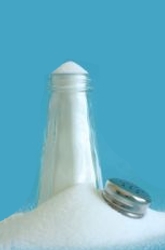
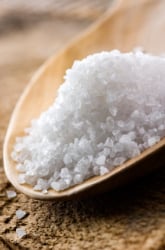
Salt, a mineral with the main component being sodium chloride, or NaCl, has been used for millennia to help preserve food (and make it tasty!). In ancient times, salt was used as a form of currency in some cultures. During the period when the ancient Phoenicians controlled the salt trade in the Mediterranean, salt was as expensive as gold! In this lab, we will learn how to separate salt from water through a solar process—you can use the sun to evaporate water, leaving behind the salt.
Objective
Evaporate water to form salt crystals.
Materials
- Baking sheet
- Black paper
- Salt
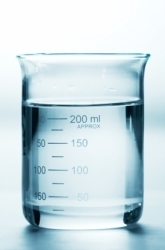
- Water
- Cooking pot
Procedure
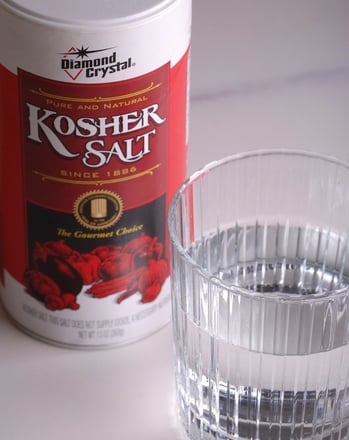
- If you do not have a source of salt water (such as water from the ocean), then mix salt and water in a cooking pot until all the salt has dissolved. Your goal is to make a fairy concentrated solution of salt and water.
- Lay the black paper on the baking sheet. Why is it important to use black paper?
- Pour the salt water into the baking sheet, making sure to cover the black paper.
- Set the baking sheet somewhere warm, like outside in the sun or on a table by a window.
- Record your observations over a number of days until all the water is gone.
Results
Salt crystals will be left over once all the water has evaporated.
Why?
The color black absorbs all frequencies of visible light, which helps the light energize the water molecules which evaporate when they get hot. It is important that the pan is somewhere warm, because the water will evaporate into the air more quickly. As the water evaporates, the salt doesn’t leave with it! Therefore, the concentration of salt in the water left behind increases. Eventually, the concentration gets so high that the water becomes supersaturated, and the salt will begin to recrystallize into a solid. When all of the water is gone, you will have salt!
The same process is done on a very large scale, worldwide. A common method involves allowing seawater to flow into shallow flat beds through channels that are then sealed off. The sun heats the water until all of it evaporates, leaving mountains of salt behind. The salt is then collected and cleaned. Salt’s a particularly important mineral because it isn’t just used for cooking—it’s an essential ingredient in agriculture, science, and countless industrial products.
Education.com provides the Science Fair Project Ideas for informational purposes only. Education.com does not make any guarantee or representation regarding the Science Fair Project Ideas and is not responsible or liable for any loss or damage, directly or indirectly, caused by your use of such information. By accessing the Science Fair Project Ideas, you waive and renounce any claims against Education.com that arise thereof. In addition, your access to Education.com's website and Science Fair Project Ideas is covered by Education.com's Privacy Policy and site Terms of Use, which include limitations on Education.com's liability.
Warning is hereby given that not all Project Ideas are appropriate for all individuals or in all circumstances. Implementation of any Science Project Idea should be undertaken only in appropriate settings and with appropriate parental or other supervision. Reading and following the safety precautions of all materials used in a project is the sole responsibility of each individual. For further information, consult your state's handbook of Science Safety.
Related learning resources