
Activity
Calorimetry: Bomb Calorimeter Experiment

Have you ever wondered why some foods give you more energy than others?
"Bomb calorimeter" sounds a bit confusing – it can also be called a "combustion calorimeter." The sample is placed in a small metal container and lit, or combusted, so it burns up. The heat from the sample is transferred to the can and then to the water. The temperature difference of the water is measured from start to finish. A larger temperature difference means that more energy was transferred.
In food, intrinsic energy is measured in Calories, with a capital C. A Calorie is 1000 calories, with a lower case c. A calorie is the amount of energy it takes to heat 1 gram of water 1 degree Celsius. Our bodies are burning up large amounts of energy from food every day and every night!
Calorimetry is the study of finding the amount of energy in a material.
Problem:
Determine which nut contains the most energy. What type of nut will produce the most energy – almonds, peanuts or cashews? Why?
(Technically, peanuts are beans, not nuts, but we can still use them in this experiment!)
Materials
- 10 whole almonds
- 10 whole peanuts, out of the shell
- 10 whole cashews
- Light or match
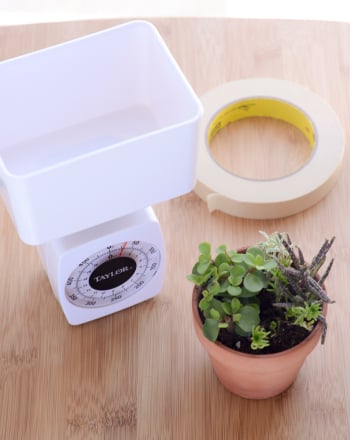
- Kitchen or food scale that measures in grams
- Water
- Jug or large container
- Can opener
- Small metal can
- Large metal can, like a coffee can
- Drill or hammer and nail
- Metal rod or skewer
- Tape
- Thermometer capable of measuring in Celcius
- Needle
- Cork
Procedure
- Fill the jug or large container with water and let it sit while you build your calorimeter. It should be room temperature by the time you have to use it.
- Insert the eye of the needle into the smaller end of the cork. Be careful of the sharp end!
- Using the can opener, cut off the top and bottom of the large can. Aluminum can be very sharp after cutting, so be wary of the edges. Wash it out and let it dry.
- Using the drill or the hammer and nail, punch some holes around the perimeter of the bottom of the large can. Why do the holes need to be at the bottom of the can?
- Using the can opener, cut off the top of the metal can. Wash it out and let it dry.
- Using the drill or the hammer and nail, create two holes directly across from each other about ½-inch above the open end of the can.
- Insert the metal rod or skewer into the holes in the small can.
- Tape the metal rod over the top opening of the large can, the side with no holes. The small can will hang down inside the larger can.
- Place the thermometer in the small can.
- Pour half a cup of water into the small can. Be sure the amount of water in the can is the same for each trial. Why is it important that the amount of water in the can is the same?
- Select a nut and weigh it on the food scale. Record the weight.
- Carefully insert the sharp end of the needle into the nut.
- Place the larger end of the cork on a non-flammable counter top with the nut facing up.
- Light the nut with a lighter or a match. It may take a couple of tries to get the nut to stay lit. Take care not to burn yourself or your clothing!
- Quickly place the large can over the cork and nut. The small hanging can will be directly over the burning nut.

- Record the beginning temperature of the water.
- Burn the nut until it goes out. Record the temperature of the water after the nut goes out and record any other observations in your notebook.
- Discard the water in the can and fill it with another half cup from the room temperature jug. Repeat 10 trials per type of nut. This allows you to get a enough samples to get a good average. Which nut produces the greatest change in temperature?
- For each nut, calculate the change in temperature per weight of the nut. Why would the temperature change per weight matter? How can we calculate calories using this information? Hint: ½ a cup of water is equal to 118 grams.
Results
On average, cashews produce the most energy, while peanuts produce the least.
Why?
Combustion, more commonly known as burning, combines a material with oxygen (which is actually very flammable!) and energy in to produce heat. This is what happens to the nut. The heat from the nut rises through the air and heats the can of water, then the temperature is measured. The holes at the bottom of the larger can insure that the heat rises upward, it acts like the chimney in a house. Without the holes, the large can would experience more of the heating.
It is important that the same amount of water be used in the can for each trial because that is the standard by which you can compare the measurement. It is the control variable.
Cashews will produce the largest amount of energy change, followed by almonds. Peanuts will produce the least. Temperature per weight matters because this is how to measure the amount of calories in the nut.
Calculating calories:
Change in degrees Celsius / grams of water = # of calories
100 * calories = # of Calories (food calories)
Education.com provides the Science Fair Project Ideas for informational purposes only. Education.com does not make any guarantee or representation regarding the Science Fair Project Ideas and is not responsible or liable for any loss or damage, directly or indirectly, caused by your use of such information. By accessing the Science Fair Project Ideas, you waive and renounce any claims against Education.com that arise thereof. In addition, your access to Education.com's website and Science Fair Project Ideas is covered by Education.com's Privacy Policy and site Terms of Use, which include limitations on Education.com's liability.
Warning is hereby given that not all Project Ideas are appropriate for all individuals or in all circumstances. Implementation of any Science Project Idea should be undertaken only in appropriate settings and with appropriate parental or other supervision. Reading and following the safety precautions of all materials used in a project is the sole responsibility of each individual. For further information, consult your state's handbook of Science Safety.
Related learning resources