
Activity
Counting Tree Rings
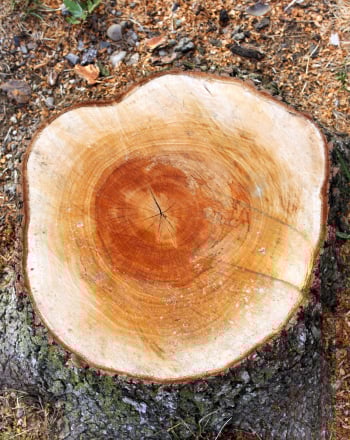
It’s commonly believed that the counting tree rings reveals the age (in years) of the tree itself. But counting tree rings may reveal more than just the age of a tree. This project aims to discover new ideas through a careful analysis of tree rings.
Problem:
How can we learn more about trees by counting tree rings?
Equipment:
- Computer with internet access.
- Access to actual tree stumps
- Digital camera
- Typical office/craft supplies (such as paper, pens & poster-board)
Procedure:
- Read overviews of relevant topics (see bibliography and terms listed above).
- Collect a number of digital photos of tree rings, both online and with your own camera.
- If possible, also collect some actual tree ring samples.
- Analyze, describe and categorize each sample and photo.
- Develop and test your own theories about tree rings.
- Interpret your findings in a detailed report.
- Show results visually using charts and graphs.
- Display any interesting photos taken throughout the course of the experiment.
Disclaimer and Safety Precautions
Education.com provides the Science Fair Project Ideas for informational purposes only. Education.com does not make any guarantee or representation regarding the Science Fair Project Ideas and is not responsible or liable for any loss or damage, directly or indirectly, caused by your use of such information. By accessing the Science Fair Project Ideas, you waive and renounce any claims against Education.com that arise thereof. In addition, your access to Education.com's website and Science Fair Project Ideas is covered by Education.com's Privacy Policy and site Terms of Use, which include limitations on Education.com's liability.
Warning is hereby given that not all Project Ideas are appropriate for all individuals or in all circumstances. Implementation of any Science Project Idea should be undertaken only in appropriate settings and with appropriate parental or other supervision. Reading and following the safety precautions of all materials used in a project is the sole responsibility of each individual. For further information, consult your state's handbook of Science Safety.
Education.com provides the Science Fair Project Ideas for informational purposes only. Education.com does not make any guarantee or representation regarding the Science Fair Project Ideas and is not responsible or liable for any loss or damage, directly or indirectly, caused by your use of such information. By accessing the Science Fair Project Ideas, you waive and renounce any claims against Education.com that arise thereof. In addition, your access to Education.com's website and Science Fair Project Ideas is covered by Education.com's Privacy Policy and site Terms of Use, which include limitations on Education.com's liability.
Warning is hereby given that not all Project Ideas are appropriate for all individuals or in all circumstances. Implementation of any Science Project Idea should be undertaken only in appropriate settings and with appropriate parental or other supervision. Reading and following the safety precautions of all materials used in a project is the sole responsibility of each individual. For further information, consult your state's handbook of Science Safety.
Related learning resources

Tree Rings
Worksheet
Tree Rings
Did you know that each tree tells a story? In this worksheet, children peer inside a tree to learn about the layers in its trunk.
4th Grade
Science
Worksheet
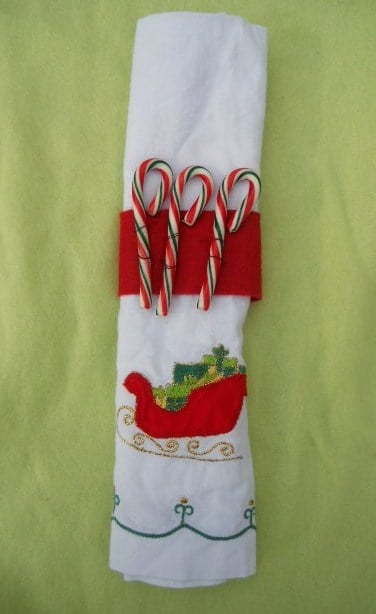
Christmas Napkin Rings
Activity
Christmas Napkin Rings
This year, create cute napkin rings to adorn your holiday table.
4th Grade
Activity
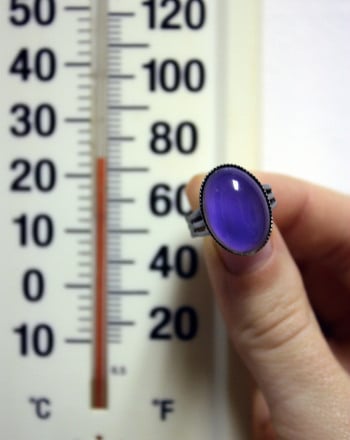
Mood Rings
Activity
Mood Rings
...Mood rings are supposed to be able to predict the wearer's mood, but do they actually work?...
Science
Activity