
Activity
Salt Melting Ice

Ice is created when water is frozen past the freezing point which is 0ºC or 32ºF, under normal conditions. When water freezes, the particles are tightly packed together and are more stationary than in the liquid state. It is now a solid rather than a liquid.
It is said that salt melts ice because it lowers the freezing temperature from it and disrupts its molecular equilibrium. But there are different kinds of salt containing different molecular compositions and elemental concentrations.
Problem:
Which salt melts ice the quickest?
Materials:
- Regular table salt
- Kosher salt
- Epsom salt
- Rock salt
- 5 blocks of ice
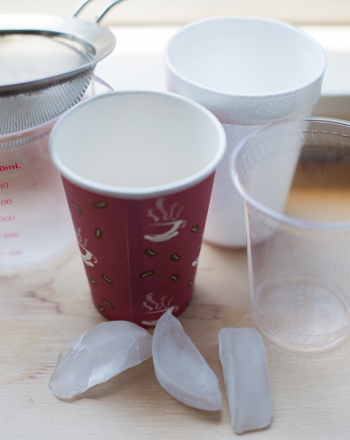
- Clear plastic containers/ boxes big enough to hold the blocks of ice
Procedure:
- If you don't have blocks of ice ready-bought, then your first step should be to pop some water into the freezer and to make the ice. They should be approximately the same size.
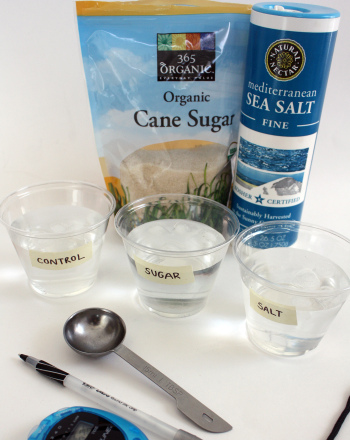
- Once you have the ice ready set them in separate clear plastic containers, side by side. Label these containers with the kind of salt that will be added to it.
- Sprinkle an even amount of each kind of salt in each separate container. Now, you'll just have to wait to see what happens! 10-minute intervals are good times to check on the ice.
- Observe the progress of the melting ice and record your findings until all the ice has melted.
- Record your results. How fast did it take for all the ice to melt out of each container?
Disclaimer and Safety Precautions
Education.com provides the Science Fair Project Ideas for informational purposes only. Education.com does not make any guarantee or representation regarding the Science Fair Project Ideas and is not responsible or liable for any loss or damage, directly or indirectly, caused by your use of such information. By accessing the Science Fair Project Ideas, you waive and renounce any claims against Education.com that arise thereof. In addition, your access to Education.com's website and Science Fair Project Ideas is covered by Education.com's Privacy Policy and site Terms of Use, which include limitations on Education.com's liability.
Warning is hereby given that not all Project Ideas are appropriate for all individuals or in all circumstances. Implementation of any Science Project Idea should be undertaken only in appropriate settings and with appropriate parental or other supervision. Reading and following the safety precautions of all materials used in a project is the sole responsibility of each individual. For further information, consult your state's handbook of Science Safety.
Education.com provides the Science Fair Project Ideas for informational purposes only. Education.com does not make any guarantee or representation regarding the Science Fair Project Ideas and is not responsible or liable for any loss or damage, directly or indirectly, caused by your use of such information. By accessing the Science Fair Project Ideas, you waive and renounce any claims against Education.com that arise thereof. In addition, your access to Education.com's website and Science Fair Project Ideas is covered by Education.com's Privacy Policy and site Terms of Use, which include limitations on Education.com's liability.
Warning is hereby given that not all Project Ideas are appropriate for all individuals or in all circumstances. Implementation of any Science Project Idea should be undertaken only in appropriate settings and with appropriate parental or other supervision. Reading and following the safety precautions of all materials used in a project is the sole responsibility of each individual. For further information, consult your state's handbook of Science Safety.
Related learning resources
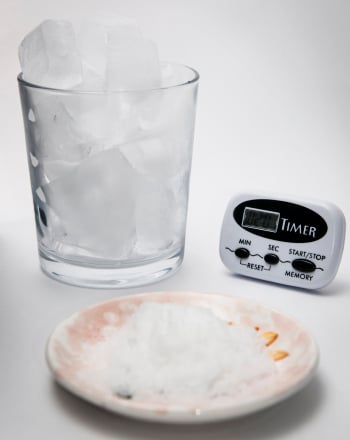
Magic Salt, Melting Snow
Activity
Magic Salt, Melting Snow
Determine whether magic salt is more effective at melting snow than regular salt. Pour one ounce of salt over the ice cubes, compare the melt downs.
Math
Activity
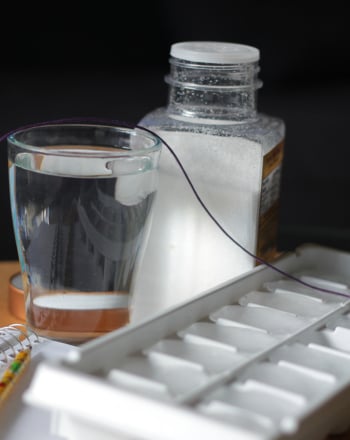
Melting Ice Experiment
Activity
Melting Ice Experiment
Kids will find out by performing this cool melting ice experiment.
3rd Grade
Math
Activity
Ice Melting
Activity
Ice Melting
Will the shape of an ice cube impact how fast the ice melts?
5th Grade
Science
Activity