Activity
Make a Geometry Dictionary
Does your kid need a "study buddy" for geometry? Forget about a tutor...simply make one yourself! Help your child study for geometry quizzes and tests with his very own geometry dictionary. It's difficult for most children to retain all the new vocabulary and concepts that come along with geometry, but it's not very effective to study for tests by flipping through the pages of a math textbook. Instead, use that textbook as a guide for creating a geometry dictionary filled with all the new ideas he needs to understand.
What You Need:
- Math textbook
- 1 colored piece of paper (any color)
- 6 blank pieces of white paper
- Long necked stapler
- Pencil
- Markers
What You Do:
Making the Dictionary:
- Begin making the geometry dictionary by placing the colored piece of paper in front of your child, vertically.
- Next, have him stack one of the blank pieces of paper on top of it, but down approximately a half-inch. Stack another blank piece on top of that one, also about a half-inch down from the previous blank piece of paper. Repeat the stacking process until all blank pages have been used.
- Then, have him carefully pick up the stack and fold it in half, making sure to not bunch the papers together.
- Ask him to flip the papers over. Do not staple the pages until the geometry journal is complete in case pages need to be omitted or added, depending on how many vocabulary words and concepts there are.
- Finally, have him write "Geometry Dictionary" on the colored piece, which is now the cover of the easy-to-flip dictionary.
Filling in the Geometry Dictionary:
- Once your child's dictionary is made, it's time to fill it with the important vocabulary, definitions, and geometry concepts that he needs to learn.
- With his help, use his class math textbook to find all the concepts that he needs to study for his upcoming geometry quizzes.
- Divide the material into categories. For example, one category would be "angles" which would include obtuse angles, acute angles, right angles, and straight angles. The angle category would take up one page. Another category might be "triangles," which would include isosceles, equilateral, obtuse, acute, and right.
- Write the name of each category on the bottom of each page, so that the name can be seen without opening the dictionary. This will make it easy to flip to a certain page while studying.
- If more pages are necessary to complete the dictionary, open it and add a piece a half-inch down, and then refold. If less pages are needed, simply discard the last one and refold.
- Next, staple the geometry dictionary together on the crease or fold.
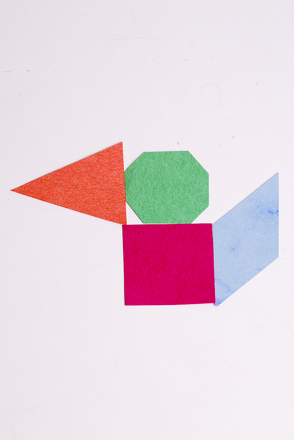
- Finally, invite him to fill in the pages with pictures and examples to explain the important vocabulary words and concepts. You may find pictures of shapes, angles, etc. in magazines and newspapers. Your child can also take pictures and paste them. For example, a bicycle lane shows parallel lines. She can also draw pictures and label them.
Related learning resources
Dictionary Skills
Worksheet
Dictionary Skills
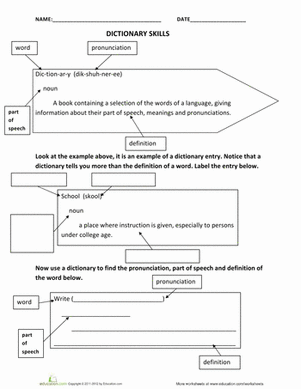
Dictionary skills are an important part of learning to read and write. Help your little learner understand the different parts of a dictionary entry.
2nd Grade
Worksheet
Dictionary Detective
Worksheet
Dictionary Detective
Use this resource to give your students practice using a dictionary’s guide words to correctly locate a word.
English Language Arts
Worksheet
Dictionary Treasure Hunt
Activity
Dictionary Treasure Hunt
This treasure hunt gets kids comfortable using the dictionary, and makes looking up words a lot of fun!
1st Grade
English Language Arts
Activity
Using the Dictionary
Worksheet
Using the Dictionary
Children learn to identify and use the formatting of a typical dictionary definition in this useful reference worksheet.
English Language Arts
Worksheet
Reference the Dictionary
Worksheet
Reference the Dictionary
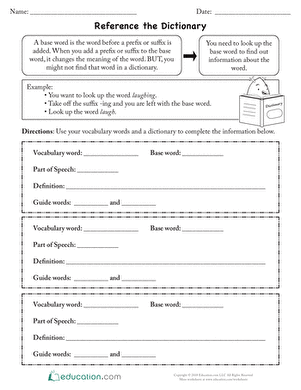
Your scholars will break down their vocabulary words with inflected endings into the base form in order to successfully locate a dictionary entry.
3rd Grade
Worksheet
Make Geometry Creatures!
Activity
Make Geometry Creatures!
But, with a little bit of art, imagination, and writing, practicing geometry has never been so much fun!
4th Grade
Activity
Human Dictionary
Lesson plan
Human Dictionary
In this lesson, students learn how to become a “human dictionary” by using a variety of strategies to figure out the meaning of unknown words.
2nd Grade
Lesson plan
Dig into the Dictionary 3
Worksheet
Dig into the Dictionary 3
Use this resource to support your students as they become familiar with removing inflected endings in order to find a dictionary entry.
3rd Grade
Worksheet
Dig into the Dictionary 2
Worksheet
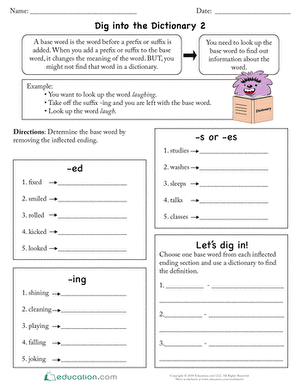
Dig into the Dictionary 2
Dig into your dictionary skills! Use this resource to guide students as they determine the right word to look up.
3rd Grade
Worksheet
My "A" Dictionary
Lesson plan
My "A" Dictionary
After brainstorming words that start with the letter A, students use words and pictures to create their own "A" dictionaries.
1st Grade
Lesson plan
Dictionary Skills: Alphabetizing Guide Words
Interactive Worksheet
Dictionary Skills: Alphabetizing Guide Words
Students will practice using dictionary guide words by matching words to the pages they would appear on.
English Language Arts
Interactive Worksheet
Using the Dictionary Guide Words
Worksheet
Using the Dictionary Guide Words
Use this exercise with your students to review alphabetizing and practice using guide words to determine a word’s correct location in the dictionary.
English Language Arts
Worksheet
See this activity in a set:
7 Great Ways to Have Fun With Geometry