
Educational Multisyllabic Words Games


About Educational Multisyllabic Words Games
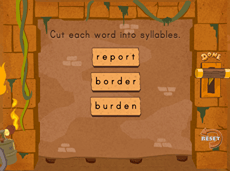
On Education.com, educational multisyllabic words games provide fun and engaging activities that help students learn to segment and decode longer words. This includes printable worksheets, digital activities, and interactive lessons that focus on recognizing syllables, applying syllable division rules, and building reading fluency.
Resources on Education.com give teachers and parents access to structured lesson plans, worksheets, and multimedia exercises for practicing multisyllabic words. These materials support lessons on decoding strategies, morphology, and phonemic awareness while encouraging students to read and spell longer words with confidence.
Educators and parents can incorporate multisyllabic word games into classroom centers, homework, or homeschooling routines. The site’s diverse activities help reinforce syllable patterns, vowel sounds, and consonant blends, making learning both effective and enjoyable.
Resources on Education.com give teachers and parents access to structured lesson plans, worksheets, and multimedia exercises for practicing multisyllabic words. These materials support lessons on decoding strategies, morphology, and phonemic awareness while encouraging students to read and spell longer words with confidence.
Educators and parents can incorporate multisyllabic word games into classroom centers, homework, or homeschooling routines. The site’s diverse activities help reinforce syllable patterns, vowel sounds, and consonant blends, making learning both effective and enjoyable.