
Subtopics:
- Analyze Characters
- Author's Purpose
- Cause and Effect
- Compare and Contrast
- Comprehension Questions
- Fact and Opinion
- Main Idea
- Make Connections
- Make Inferences✕
- Make Predictions
- Point of View and Perspective
- Problem and Solution
- Sequence of Events
- Story Elements
- Summarize and Retell
- Text Features
- Text Structure
- Theme
- Word Choice
Make Inferences Resources
142 results
English Language Arts
✕Sort by:
142 results
Sort by:












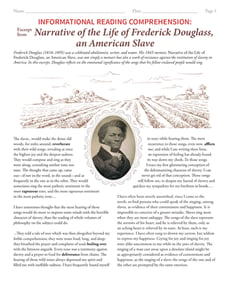

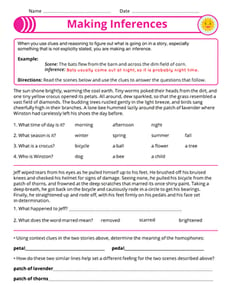

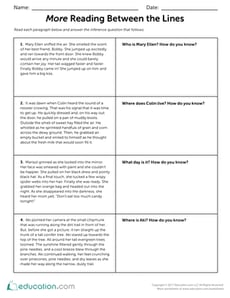


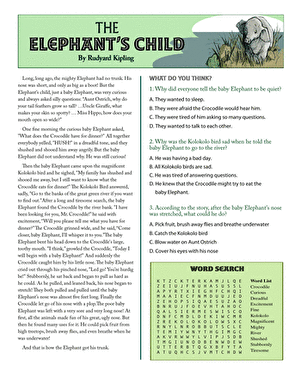













About Make Inferences Resources
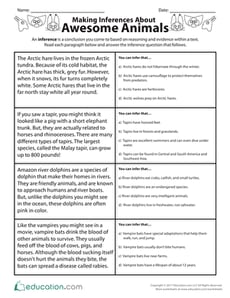
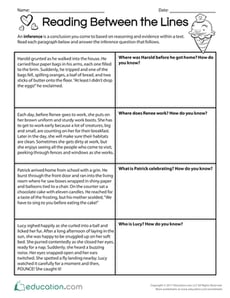
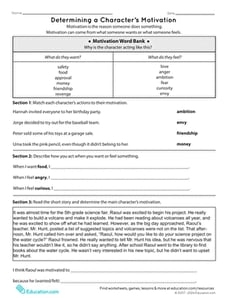
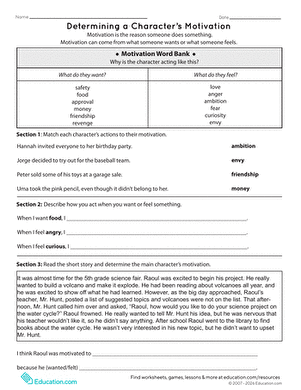
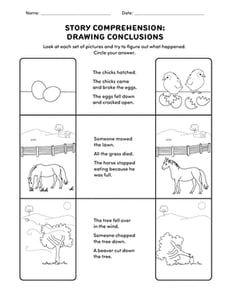
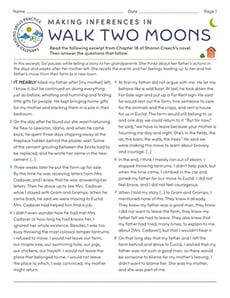
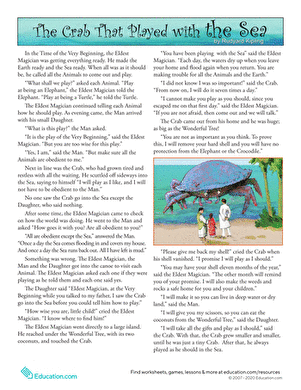
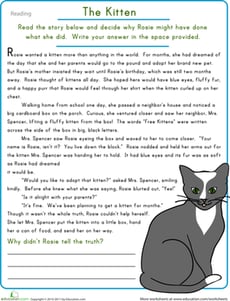
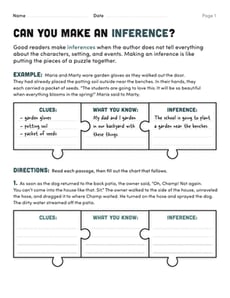
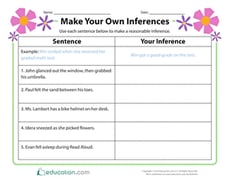
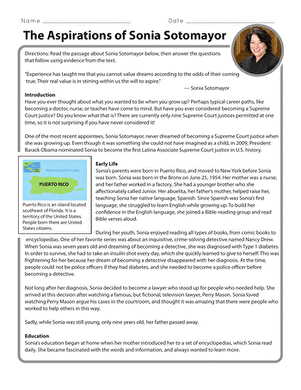
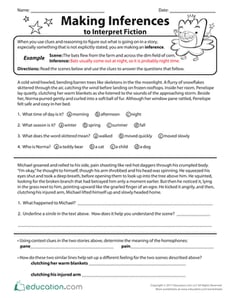
On Education.com, students learn to draw conclusions and interpret clues through a variety of activities that cover text and images. These inference resources include worksheets, abandon classroom practice, picture prompts, videos, and collaborative group exercises. This helps learners develop critical thinking skills needed for reading comprehension and everyday problem-solving. The resources support a wide variety of educational goals and learning styles.
Educators and parents can access complete teaching materials such as printed lesson plans, digital game-based activities, and structured learning guides that reinforce inference skills. These resources include hands-on exercises, visual cues, and strategies such as think-aloud modeling and graphic organizers. Using these materials makes practicing inferences engaging, accessible, and aligned with developmental readiness.
This makes it easier for teachers to provide students with ongoing inference practice outside of the classroom and for parents to support learning at home. It also saves instructional time by offering ready-to-use resources that provide structured yet flexible practice. Students build confidence and independence by applying inferencing strategies with a variety of texts and images.
Educators and parents can access complete teaching materials such as printed lesson plans, digital game-based activities, and structured learning guides that reinforce inference skills. These resources include hands-on exercises, visual cues, and strategies such as think-aloud modeling and graphic organizers. Using these materials makes practicing inferences engaging, accessible, and aligned with developmental readiness.
This makes it easier for teachers to provide students with ongoing inference practice outside of the classroom and for parents to support learning at home. It also saves instructional time by offering ready-to-use resources that provide structured yet flexible practice. Students build confidence and independence by applying inferencing strategies with a variety of texts and images.