
5th Grade Comparing Volume Resources



About 5th Grade Comparing Volume Resources
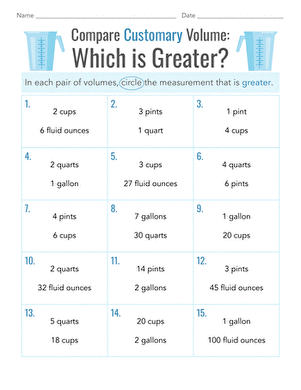
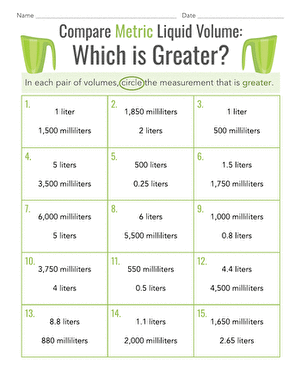
On Education.com, 5th grade comparing volume lessons introduce students to concepts like cubic units, learning to estimate and measure the volume of rectangular prisms. This track helps young learners understand how to compare the capacities of different objects and develop measurement strategies. Students explore worksheets that include visual models and problem-solving exercises, reinforcing math concepts in practical situations.
Accessing educational materials such as interactive worksheets, volume puzzles, and hands-on activities allows teachers and parents to provide structured learning experiences. This page offers resources that guide students in comparing volumes, applying formulas, and developing spatial awareness while making math engaging and understandable. These tools support robust education by integrating visual, written, and practical classroom methods.
Using 5th grade comparing volume resources from Education.com enables parents and teachers to deepen students’ understanding of measurement concepts. These ready-to-use lesson plans and practice exercises save time by providing structured activities that reinforce student learning. It provides children opportunities to strengthen math skills while fostering critical thinking and applying knowledge in real-world contexts.
Accessing educational materials such as interactive worksheets, volume puzzles, and hands-on activities allows teachers and parents to provide structured learning experiences. This page offers resources that guide students in comparing volumes, applying formulas, and developing spatial awareness while making math engaging and understandable. These tools support robust education by integrating visual, written, and practical classroom methods.
Using 5th grade comparing volume resources from Education.com enables parents and teachers to deepen students’ understanding of measurement concepts. These ready-to-use lesson plans and practice exercises save time by providing structured activities that reinforce student learning. It provides children opportunities to strengthen math skills while fostering critical thinking and applying knowledge in real-world contexts.