
1st Grade Nonfiction Make Predictions Resources


About 1st Grade Nonfiction Make Predictions Resources
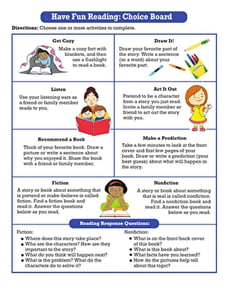
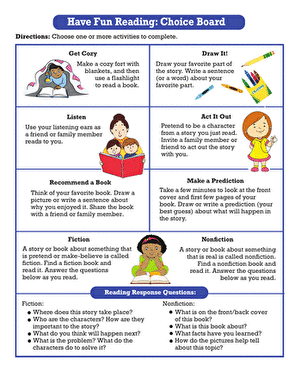
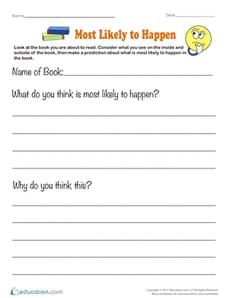
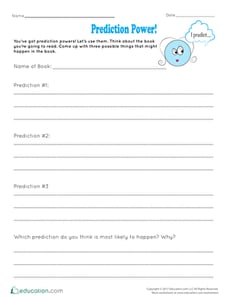
On Education.com, parents and teachers can explore a variety of resources designed to help 1st-grade students practice making predictions with nonfiction texts. This includes lesson plans, worksheets, and activities that engage students in using clues from photos, headings, and text to anticipate what will happen next. Such activities support early literacy skills, comprehension, and critical thinking development. Educators can access ready-to-use materials or adapt lessons for in-class or remote learning environments.
Parents and teachers can review printable prediction organizers, guided reading activities, and anchor charts that reinforce how to make educated guesses based on nonfiction features. Materials on Education.com introduce young learners to using clues from contextual elements to enhance understanding while maintaining reading engagement. These resources encourage students to think ahead and support diverse literacy learning strategies.
Whether at school or home, on Education.com these resources help young readers develop prediction skills by providing accessible, organized activities that focus on nonfiction texts. This structured approach gives children confidence in making guesses, making reading both educational and enjoyable. Educators and parents can quickly access tools that promote active reading and critical thinking for 1st-grade students.
Parents and teachers can review printable prediction organizers, guided reading activities, and anchor charts that reinforce how to make educated guesses based on nonfiction features. Materials on Education.com introduce young learners to using clues from contextual elements to enhance understanding while maintaining reading engagement. These resources encourage students to think ahead and support diverse literacy learning strategies.
Whether at school or home, on Education.com these resources help young readers develop prediction skills by providing accessible, organized activities that focus on nonfiction texts. This structured approach gives children confidence in making guesses, making reading both educational and enjoyable. Educators and parents can quickly access tools that promote active reading and critical thinking for 1st-grade students.