
4th Grade Multiply Using Area Models Resources






About 4th Grade Multiply Using Area Models Resources
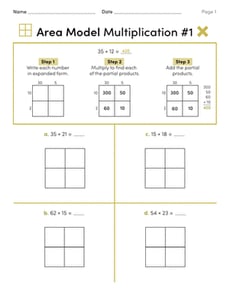
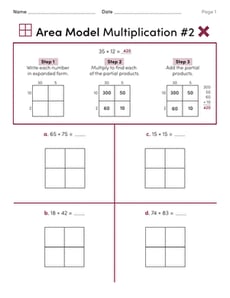
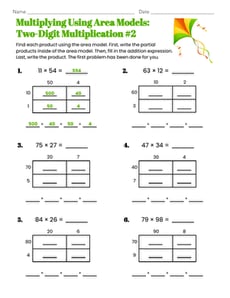
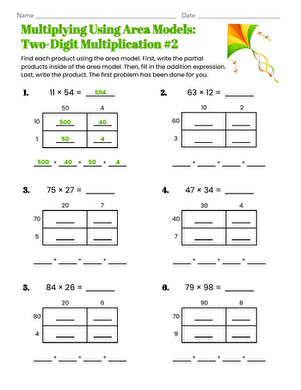
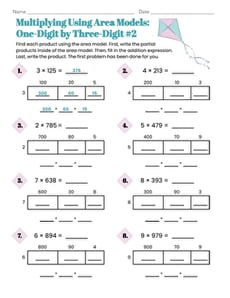
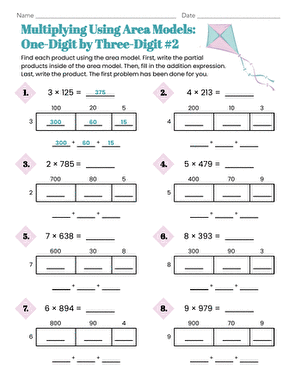
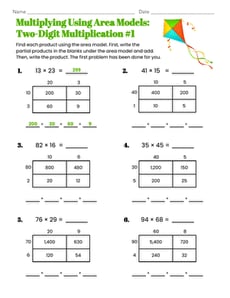
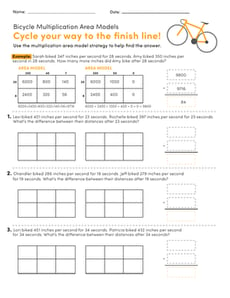
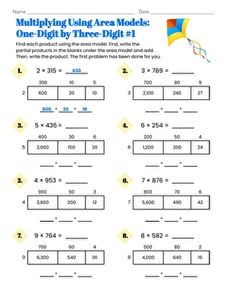
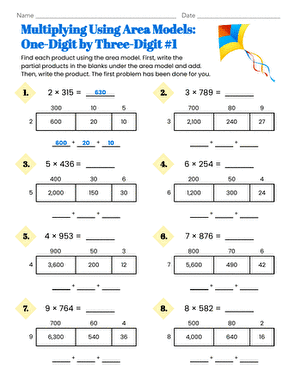
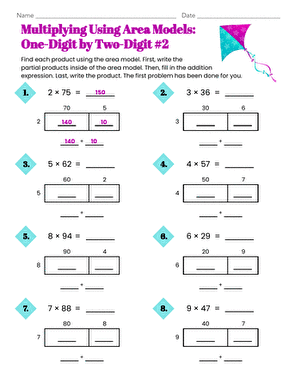
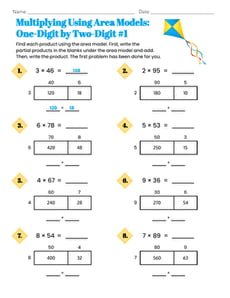
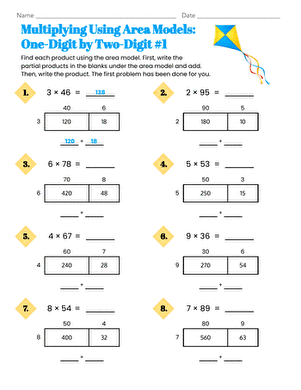
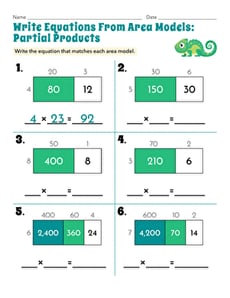
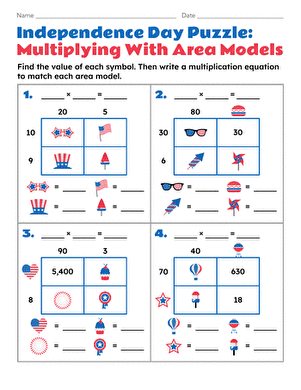
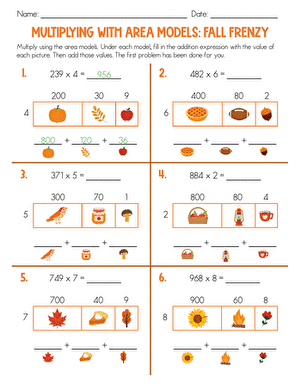
On Education.com, multiply using area models is an effective way to help 4th-grade students visualize and understand multi-digit multiplication concepts. Resources include printable worksheets that guide students through creating and solving area model problems, along with clear step-by-step examples that reinforce strategic thinking. These materials are designed to provide hands-on practice for learners to build confidence and master multiplication strategies.
Title536 Education.com offers a variety of interactive multiplication activities for 4th graders, such as digital games and algebra-themed exercises. These resources incorporate visual learning approaches like grids and bar models to reinforce place value and number decomposition skills. Games and lesson plans provide engaging ways for students to develop problem-solving abilities and strengthen mathematical thinking.
Educators and parents can use these materials to create structured learning experiences during classroom lessons or homework. By providing visually appealing practice options, children can learn multiplication invariants more efficiently while gaining confidence in their math skills. These tools make it easier for learners to apply classroom strategies to real-world problems and everyday calculations.
Title536 Education.com offers a variety of interactive multiplication activities for 4th graders, such as digital games and algebra-themed exercises. These resources incorporate visual learning approaches like grids and bar models to reinforce place value and number decomposition skills. Games and lesson plans provide engaging ways for students to develop problem-solving abilities and strengthen mathematical thinking.
Educators and parents can use these materials to create structured learning experiences during classroom lessons or homework. By providing visually appealing practice options, children can learn multiplication invariants more efficiently while gaining confidence in their math skills. These tools make it easier for learners to apply classroom strategies to real-world problems and everyday calculations.