
Equal Parts Resources
154 results
Math
✕Sort by:
154 results
Sort by:





















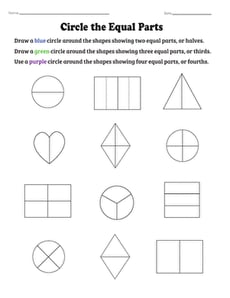
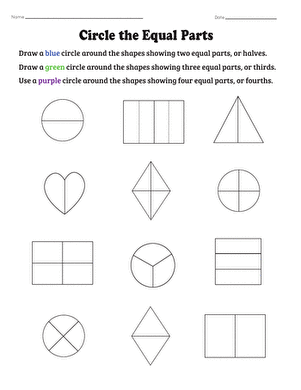


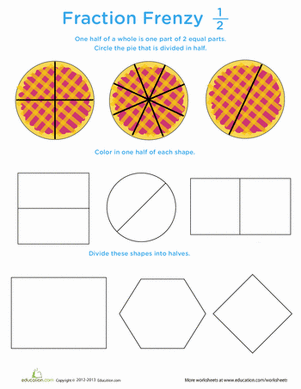

About Equal Parts Resources
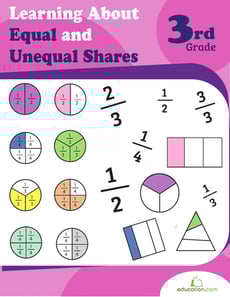
On Education.com, the Equal Parts Resources page offers a collection of materials designed to give parents and teachers multiple perspectives across subjects. From science experiments and math challenges to language arts and social studies activities, these resources help make learning engaging by showing how concepts are interconnected. This hands-on content supports diverse learning styles and fosters critical thinking by applying ideas in real-world contexts.
The Equal Parts Resources feature worksheets, lists, teacher guides, and activities that explore the interconnectedness of concepts within a discipline or across multiple areas. For example, saturn, as seen in a planet worksheet on Education.com, allows learners to examine its features alongside other planets to understand space measurement, planets’ characteristics, and connections to asteroids and moons. This approach helps solidify knowledge through exploration and comparison.
Using these resources, educators and parents can save time planning lessons that promote integrated learning. They can incorporate equal parts activities that tie together different subjects or concepts, allowing children to see patterns and relationships. This makes it easier to create engaging, relevant lessons that deepen understanding and enhance critical thinking skills.
The Equal Parts Resources feature worksheets, lists, teacher guides, and activities that explore the interconnectedness of concepts within a discipline or across multiple areas. For example, saturn, as seen in a planet worksheet on Education.com, allows learners to examine its features alongside other planets to understand space measurement, planets’ characteristics, and connections to asteroids and moons. This approach helps solidify knowledge through exploration and comparison.
Using these resources, educators and parents can save time planning lessons that promote integrated learning. They can incorporate equal parts activities that tie together different subjects or concepts, allowing children to see patterns and relationships. This makes it easier to create engaging, relevant lessons that deepen understanding and enhance critical thinking skills.