
Educational Area of Squares and Rectangles Games

About Educational Area Of Squares And Rectangles Games
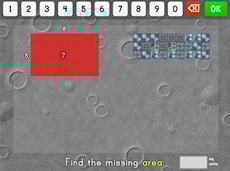
On Education.com, the educational area of squares and rectangles games provides interactive classroom activities, interactive puzzles, and lesson plans that help students visualize and explore geometric shapes. These resources facilitate hands-on learning and reinforce concepts by allowing students to identify, draw, and analyze squares and rectangles through engaging exercises. Educators can incorporate printed worksheets, digital manipulatives, and pair activities to create a comprehensive learning experience.
This page on Education.com offers access to worksheets, interactive games, and lesson plans that focus on understanding the properties of squares and rectangles. Tools such as pattern recognition exercises, shape sorting activities, and shape-area calculation challenges list provide a variety of ways to explore geometry involving these figures. These resources make practice structured and fun, helping students build fluency and spatial reasoning skills while connecting mathematical concepts to real-world objects.
By utilizing these resources, parents and teachers can support mastery of foundational geometry skills while saving planning time. Resources are adaptable for students at different learning levels, allowing for differentiation and tailored instruction. Using engaging drawings, exercises, and digital applications, children can strengthen their understanding of shape attributes, area, perimeter, and classification by symmetry or angles.
This page on Education.com offers access to worksheets, interactive games, and lesson plans that focus on understanding the properties of squares and rectangles. Tools such as pattern recognition exercises, shape sorting activities, and shape-area calculation challenges list provide a variety of ways to explore geometry involving these figures. These resources make practice structured and fun, helping students build fluency and spatial reasoning skills while connecting mathematical concepts to real-world objects.
By utilizing these resources, parents and teachers can support mastery of foundational geometry skills while saving planning time. Resources are adaptable for students at different learning levels, allowing for differentiation and tailored instruction. Using engaging drawings, exercises, and digital applications, children can strengthen their understanding of shape attributes, area, perimeter, and classification by symmetry or angles.