
1st Grade Subtraction Guided Lessons

About 1st Grade Subtraction Guided Lessons
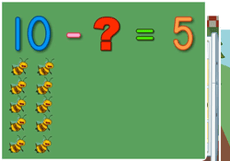
On Education.com, first-grade subtraction guided lessons introduce children to foundational subtraction concepts. The site provides instructional activities that help young learners grasp taking away, understanding number bonds, and learning to count back using visual aids like number lines and manipulatives. These lessons focus on moving from concrete actions, such as physically removing objects, to abstract math expressions, supporting a strong bedrock for future math skills.
Education.com offers structured subtraction worksheets, printable activities, interactive lessons, and classroom resources that support early math development. Materials include practice with subtracting from 10, solving addition and subtraction fact families, and applying double jump strategies. These materials help educators and parents provide engaging, hands-on learning experiences that foster confidence in math and numerical reasoning.
Educators and parents can use these guided lessons to create engaging classroom activities or homeschooling plans that reinforce subtraction strategies in early math education. Combining visual aids, drawing exercises, and real-world problem routines, students develop both conceptual understanding and computational fluency. This approach makes learning subtraction enjoyable and effective for young learners.
Education.com offers structured subtraction worksheets, printable activities, interactive lessons, and classroom resources that support early math development. Materials include practice with subtracting from 10, solving addition and subtraction fact families, and applying double jump strategies. These materials help educators and parents provide engaging, hands-on learning experiences that foster confidence in math and numerical reasoning.
Educators and parents can use these guided lessons to create engaging classroom activities or homeschooling plans that reinforce subtraction strategies in early math education. Combining visual aids, drawing exercises, and real-world problem routines, students develop both conceptual understanding and computational fluency. This approach makes learning subtraction enjoyable and effective for young learners.