
1st Grade Measuring Length Interactive Worksheets


About 1st Grade Measuring Length Interactive Worksheets
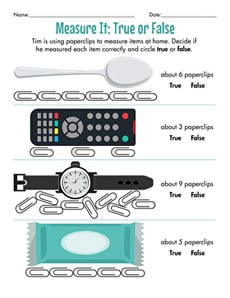
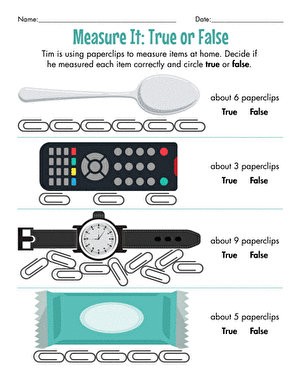
On Education.com, the 1st grade measuring length interactive worksheets provide young learners with interactive exercises that help them practice measuring objects using rulers and other tools. These materials teach students to compare lengths, estimate measurements, and read measurement markings accurately. By engaging in hands-on activities, children develop practical math skills and gain confidence in applying measurement concepts. The worksheets also include printable charts, guided exercises, and real-world examples to make learning accessible and fun.
Through this collection, educators and parents can access clear, engaging printables and digital activities that support measurement instruction in 1st grade. These resources help students recognize standard units, understand concepts of length, and improve fine motor skills through measuring activities. Incorporating these worksheets into classroom instruction or at-home practice encourages active learning while reinforcing foundational math skills.
Using these measuring length worksheets saves time by providing ready-made, structured activities that make teaching measurement straightforward. Practitioners can track progress, adapt exercises to individual needs, and create a variety of learning opportunities. Hands-on worksheets provide a clear pathway from recognizing objects to comparing lengths and applying measurement strategies confidently.
Through this collection, educators and parents can access clear, engaging printables and digital activities that support measurement instruction in 1st grade. These resources help students recognize standard units, understand concepts of length, and improve fine motor skills through measuring activities. Incorporating these worksheets into classroom instruction or at-home practice encourages active learning while reinforcing foundational math skills.
Using these measuring length worksheets saves time by providing ready-made, structured activities that make teaching measurement straightforward. Practitioners can track progress, adapt exercises to individual needs, and create a variety of learning opportunities. Hands-on worksheets provide a clear pathway from recognizing objects to comparing lengths and applying measurement strategies confidently.