
1st Grade Add Using Compensation Resources
About 1st Grade Add Using Compensation Resources
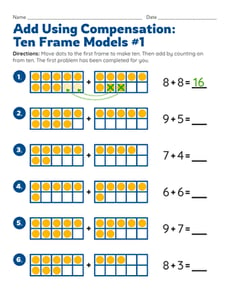
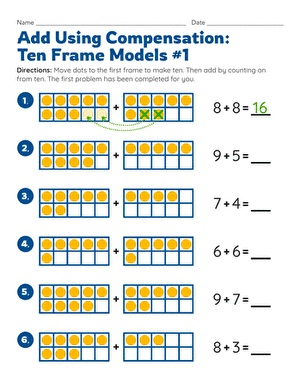
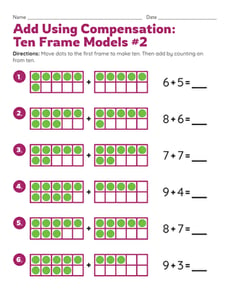
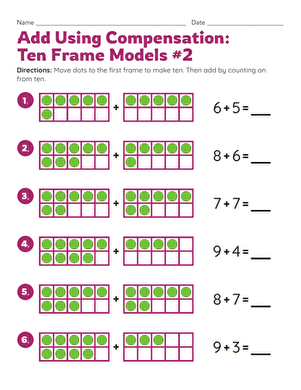
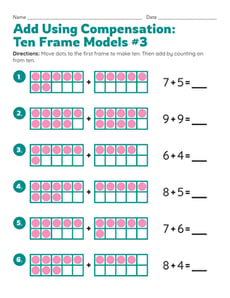
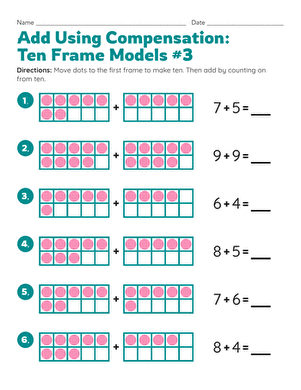
On Education.com, parents and teachers can explore a wide range of resources that teach addition using compensation, a strategy that makes calculation easier by adjusting numbers to friendly totals like multiples of ten. These educational materials include printable worksheets, interactive activities, and lesson plans that demonstrate how to turn problems such as 29 + 46 into 30 + 45, making math practice engaging and accessible for first-grade students.
This page provides practical tools for helping young learners grasp addition through compensation techniques, linking to exercises that break down problems step-by-step and enhance mental math skills. Math games and manipulatives available on Education.com reinforce learning through hands-on practice, making addition both fun and educational. These resources encourage problem-solving and number sense while fostering confidence in young mathematicians.
Educators and parents can use these materials to supplement classroom lessons or homework, saving time while providing effective, engaging ways to master addition concepts. By offering structured exercises and creative activities, students gain confidence and develop strong foundational math skills that support future learning.
This page provides practical tools for helping young learners grasp addition through compensation techniques, linking to exercises that break down problems step-by-step and enhance mental math skills. Math games and manipulatives available on Education.com reinforce learning through hands-on practice, making addition both fun and educational. These resources encourage problem-solving and number sense while fostering confidence in young mathematicians.
Educators and parents can use these materials to supplement classroom lessons or homework, saving time while providing effective, engaging ways to master addition concepts. By offering structured exercises and creative activities, students gain confidence and develop strong foundational math skills that support future learning.