
1st Grade Ecosystems Resources

About 1st Grade Ecosystems Resources
On Education.com, 1st grade ecosystems resources introduce young learners to the interactions between living and nonliving components within various habitats such as rainforests, oceans, deserts, and wetlands. These materials help students understand animal and plant needs, adaptation, and the role of ecosystems in supporting biodiversity. Using drawings, worksheets, puzzles, and short projects, children gain foundational knowledge about the natural world in an engaging way.
Explore Education.com’s digital worksheets, printable activities, and interactive games focused on ecosystems at the 1st grade level. Resources like habitat cutouts, survival scenarios, and observation pages make lessons hands-on and interactive. Teachers and parents can access curated lesson plans, classroom activities, and structured exercises that support standards on living organisms, ecosystems, and environmental science. These ready-to-use resources streamline lesson planning while making science accessible and fun.
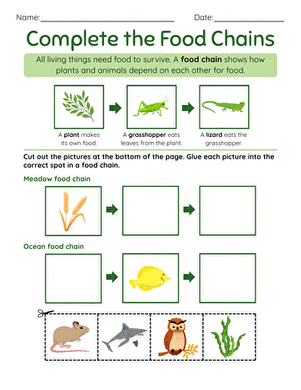
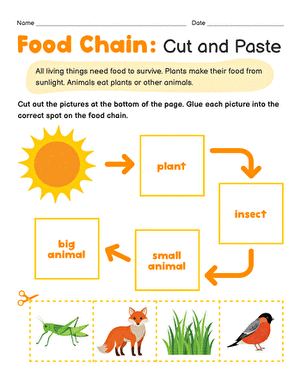
Students can practice identifying animals and plants, simulate food chain relationships, or explore habitat adaptations through practical activities on Education.com. By engaging with distinctive worksheets, online games, and birdwatching logs, children reinforce scientific concepts while fostering curiosity about nature. Educators and parents can integrate these resources into daily lessons or homework, enabling consistent, structured learning that enhances observation skills and ecological understanding.
Explore Education.com’s digital worksheets, printable activities, and interactive games focused on ecosystems at the 1st grade level. Resources like habitat cutouts, survival scenarios, and observation pages make lessons hands-on and interactive. Teachers and parents can access curated lesson plans, classroom activities, and structured exercises that support standards on living organisms, ecosystems, and environmental science. These ready-to-use resources streamline lesson planning while making science accessible and fun.
Students can practice identifying animals and plants, simulate food chain relationships, or explore habitat adaptations through practical activities on Education.com. By engaging with distinctive worksheets, online games, and birdwatching logs, children reinforce scientific concepts while fostering curiosity about nature. Educators and parents can integrate these resources into daily lessons or homework, enabling consistent, structured learning that enhances observation skills and ecological understanding.