
2nd Grade Three-Dimensional Shapes Interactive Worksheets



About 2nd Grade Three-dimensional Shapes Interactive Worksheets
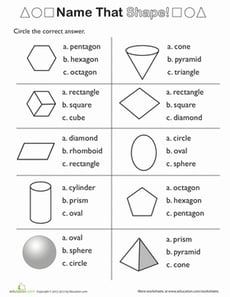
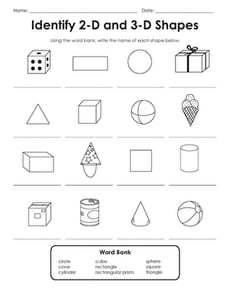
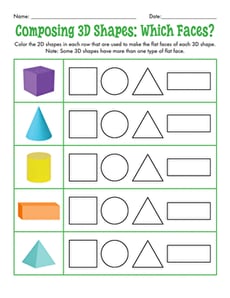
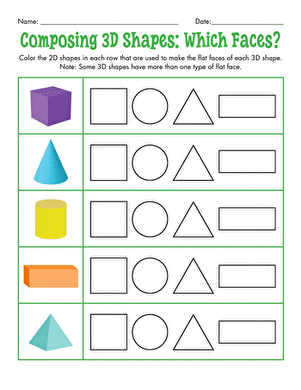
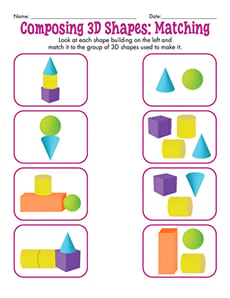
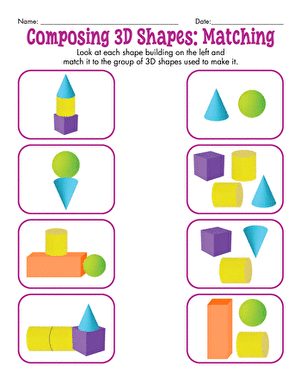
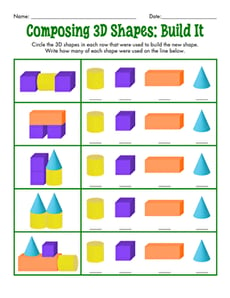
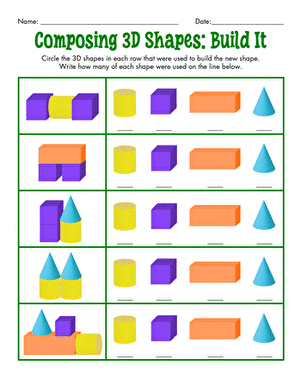
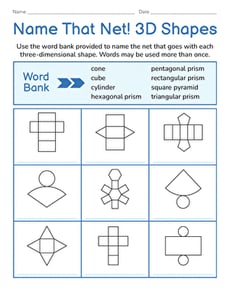
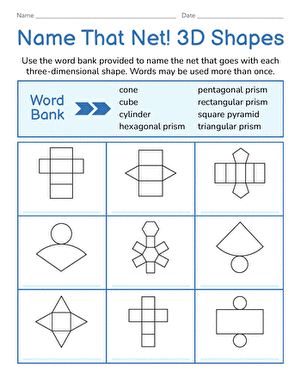
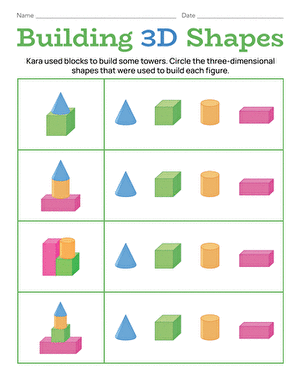
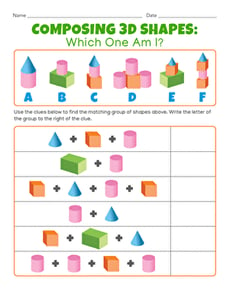
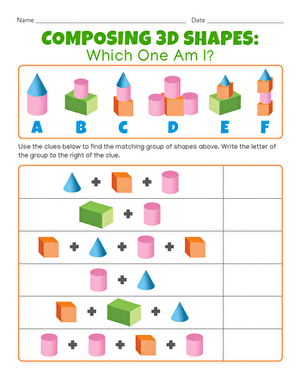
On Education.com, children can explore 2nd grade three-dimensional shapes through interactive worksheets that help develop spatial awareness, shape recognition, and geometry skills. These printable activities utilize hands-on lessons, puzzles, and model-building exercises to engage young learners in practical applications of solid shapes such as cubes, cylinders, cones, and spheres. Educators and parents can use these resources to reinforce classroom geometry concepts or provide at-home learning opportunities.
The education website offers a variety of 2nd grade interactive worksheets and classroom-ready lesson plans focused on 3D shapes. Materials include printable activities, digital exercises, and shape-construction projects that enhance problem-solving and critical thinking. By integrating familiar shapes into engaging contexts, educators make geometry accessible and enjoyable for young students. Additionally, activity sheets encourage observation, comparison, and categorization of geometric objects.
agingge inthese comprehensive forms, learners can refine their shape identification skills while also practicing fine motor skills, arithmetic relationships, and spatial reasoning. Educators and parents can access ready-to-use printable worksheets and interactive digital modules that keep geometry hands-on and stimulating. These teaching resources support curriculum standards and foster foundational math concepts in an interactive way.
The education website offers a variety of 2nd grade interactive worksheets and classroom-ready lesson plans focused on 3D shapes. Materials include printable activities, digital exercises, and shape-construction projects that enhance problem-solving and critical thinking. By integrating familiar shapes into engaging contexts, educators make geometry accessible and enjoyable for young students. Additionally, activity sheets encourage observation, comparison, and categorization of geometric objects.
agingge inthese comprehensive forms, learners can refine their shape identification skills while also practicing fine motor skills, arithmetic relationships, and spatial reasoning. Educators and parents can access ready-to-use printable worksheets and interactive digital modules that keep geometry hands-on and stimulating. These teaching resources support curriculum standards and foster foundational math concepts in an interactive way.