
2nd Grade Parallel and Perpendicular Lines Resources


About 2nd Grade Parallel And Perpendicular Lines Resources
On Education.com, parents and teachers can explore a variety of educational materials to teach 2nd grade students about parallel and perpendicular lines. These include worksheets, printable activities, and classroom games that help children identify and draw these lines in real-world and geometric contexts, such as railroad tracks versus street corners. The site provides structured lessons that combine practice with visual aids to enhance foundational geometry skills.
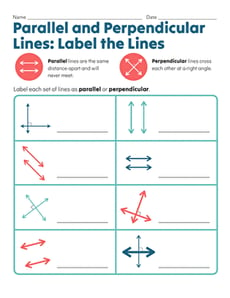
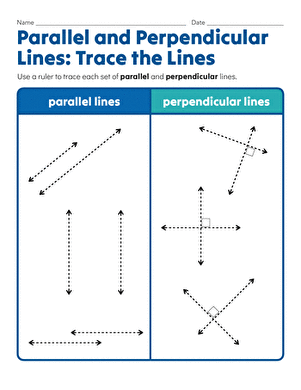
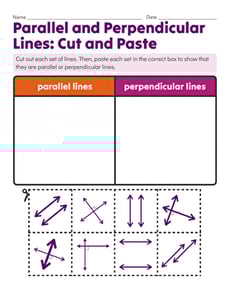
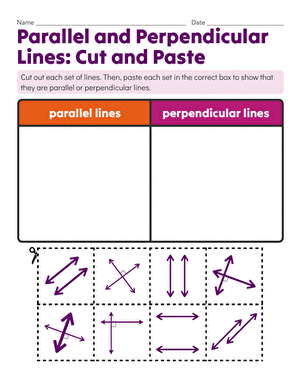
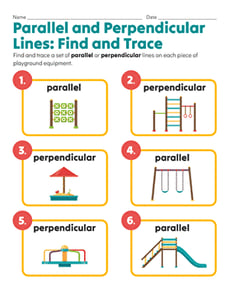
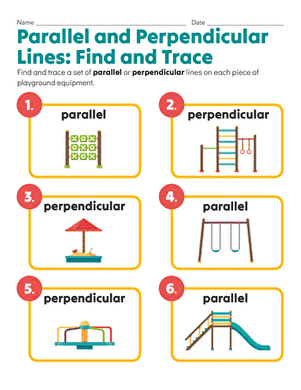
This page offers structured 2nd grade worksheets and printable resources to compare and sort parallel and perpendicular lines. Materials include cut-and-paste activities, drawing exercises, and real-life examples that encourage hands-on learning. By utilizing these resources, educators can reinforce geometric concepts while making learning engaging and accessible for young students.
Educators and parents can use these materials to create interactive lesson plans and homework assignments that strengthen students’ understanding of parallel and perpendicular lines. The resources are designed to provide students with step-by-step guided practice, making it easier to incorporate geometry lessons into daily learning routines. Building these skills early supports overall mathematical and spatial reasoning development.
This page offers structured 2nd grade worksheets and printable resources to compare and sort parallel and perpendicular lines. Materials include cut-and-paste activities, drawing exercises, and real-life examples that encourage hands-on learning. By utilizing these resources, educators can reinforce geometric concepts while making learning engaging and accessible for young students.
Educators and parents can use these materials to create interactive lesson plans and homework assignments that strengthen students’ understanding of parallel and perpendicular lines. The resources are designed to provide students with step-by-step guided practice, making it easier to incorporate geometry lessons into daily learning routines. Building these skills early supports overall mathematical and spatial reasoning development.