
3rd Grade Animals Interactive Worksheets

About 3rd Grade Animals Interactive Worksheets
On Education.com, third grade animals interactive worksheets provide a structured way for students to learn about different animal species, habitats, and characteristics through engaging activities. These worksheets often include coloring pages, fact-matching games, and reading exercises that make learning about animals fun and accessible. They support classroom instruction and homeschooling by reinforcing science concepts in a hands-on, interactive format.
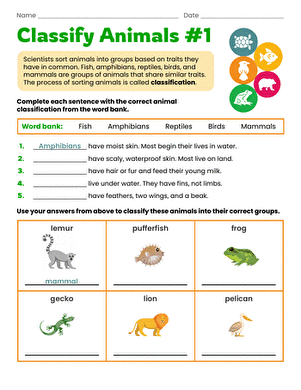
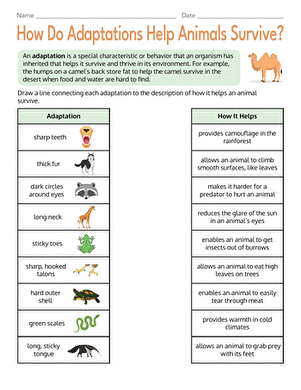
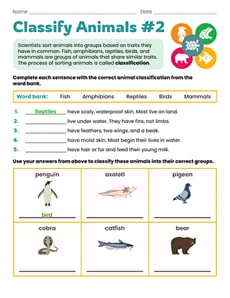
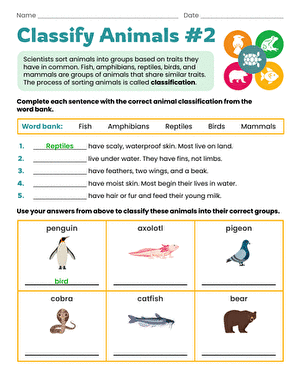
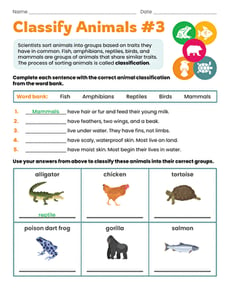
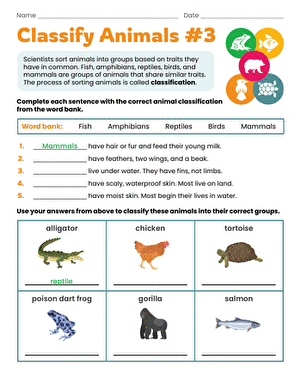
This page offers digital simulations, printable activities, and lesson plans designed to deepen third-grade students' understanding of animals. Educators and parents can access activity sheets that cover topics such as animal adaptations, lifecycles, and classification. These resources are structured to align with educational standards while providing variety and context for learning about wildlife.
Using these worksheets allows teachers and parents to teach about animals in an structured way that promotes critical thinking, observation, and classification skills. Interactive lessons and activity pages encourage children to explore topics independently or collaboratively, making science engaging and approachable for third graders. Regular use of such materials supports ongoing curiosity and foundational understanding of biological concepts.
This page offers digital simulations, printable activities, and lesson plans designed to deepen third-grade students' understanding of animals. Educators and parents can access activity sheets that cover topics such as animal adaptations, lifecycles, and classification. These resources are structured to align with educational standards while providing variety and context for learning about wildlife.
Using these worksheets allows teachers and parents to teach about animals in an structured way that promotes critical thinking, observation, and classification skills. Interactive lessons and activity pages encourage children to explore topics independently or collaboratively, making science engaging and approachable for third graders. Regular use of such materials supports ongoing curiosity and foundational understanding of biological concepts.