
3rd Grade Energy Resources




About 3rd Grade Energy Resources
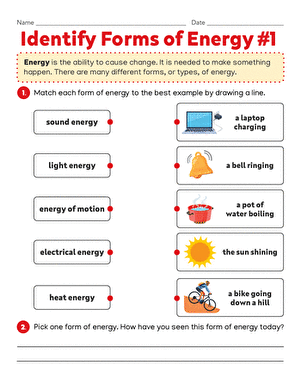
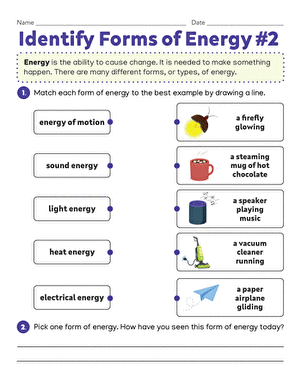
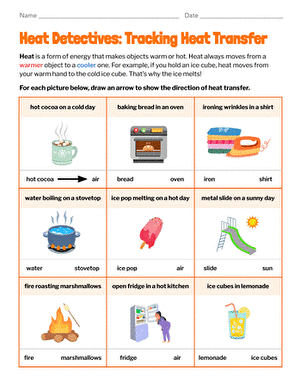
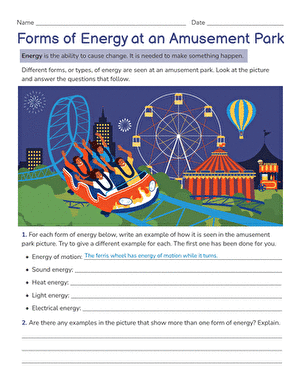
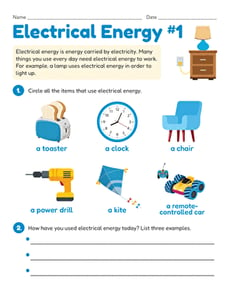
On Education.com, 3rd Grade Energy Resources provides students with lesson plans, worksheets, and interactive activities that explore different sources of energy such as solar, wind, water, and fossil fuels. These resources help young learners understand how energy is generated, distributed, and used in everyday life, laying the foundation for future lessons in science and environmental studies.
Explore a variety of educational materials on Education.com, including printable worksheets, hands-on experiments, and classroom activities that introduce energy concepts. These resources encourage hands-on learning, critical thinking, and exploration of real-world applications of energy sources and conservation methods.
This page provides educators and parents with ready-to-use resources that make teaching about energy engaging and effective. By using on-site materials, students can practice identifying different energy sources, understand their benefits and challenges, and compare renewable and nonrenewable options to promote sustainability literacy.
Explore a variety of educational materials on Education.com, including printable worksheets, hands-on experiments, and classroom activities that introduce energy concepts. These resources encourage hands-on learning, critical thinking, and exploration of real-world applications of energy sources and conservation methods.
This page provides educators and parents with ready-to-use resources that make teaching about energy engaging and effective. By using on-site materials, students can practice identifying different energy sources, understand their benefits and challenges, and compare renewable and nonrenewable options to promote sustainability literacy.