
3rd Grade Symmetry Worksheets








About 3rd Grade Symmetry Worksheets
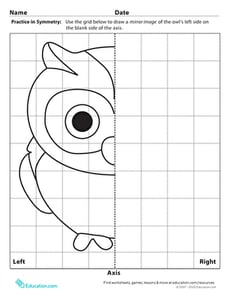
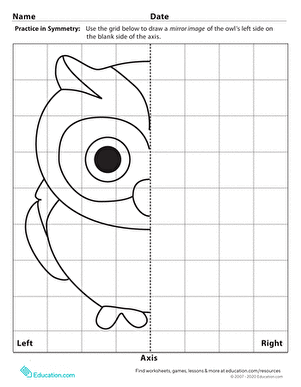
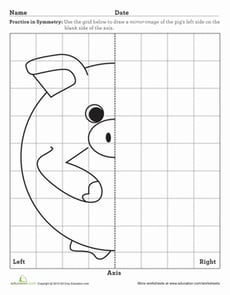
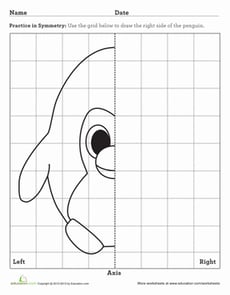
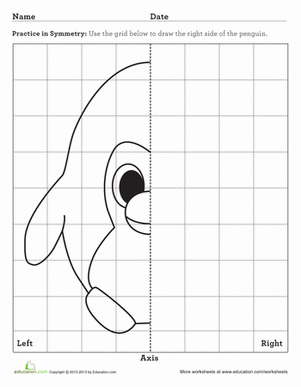
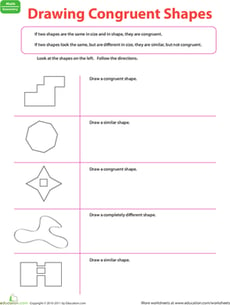
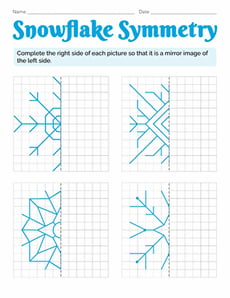
On Education.com, 3rd grade symmetry worksheets provide students with engaging activities that help reinforce geometric concepts by exploring reflective symmetry, bilateral balance, and shapes. These resources guide young learners through identifying symmetric figures and creating their own, building foundational math and visual-spatial skills while making learning fun. Each worksheet includes diagrams, practice exercises, and visual examples to enhance understanding of symmetry in both classroom and homework settings.
Students can use these infinity and printable exercises to explore symmetry independently or with guidance, promoting hands-on math practice. Educators and parents can effectively reinforce geometry lessons from instruction through structured activities, check understanding, and support creative problem-solving. The worksheets focus on seamless curriculum integration and encouraging keen observation of visual patterns across a variety of formats.
By incorporating interactive symmetry exercises into children’s learning routines, educators and parents can solidify geometry foundations while fostering critical thinking and pattern recognition. These resources on Education.com enable students to explore shape relationships and spatial reasoning in engaging, accessible ways. The materials also allow for adaptable, at-home practice that supplements classroom instruction, promoting both academic growth and confidence in math skills.
Students can use these infinity and printable exercises to explore symmetry independently or with guidance, promoting hands-on math practice. Educators and parents can effectively reinforce geometry lessons from instruction through structured activities, check understanding, and support creative problem-solving. The worksheets focus on seamless curriculum integration and encouraging keen observation of visual patterns across a variety of formats.
By incorporating interactive symmetry exercises into children’s learning routines, educators and parents can solidify geometry foundations while fostering critical thinking and pattern recognition. These resources on Education.com enable students to explore shape relationships and spatial reasoning in engaging, accessible ways. The materials also allow for adaptable, at-home practice that supplements classroom instruction, promoting both academic growth and confidence in math skills.