
3rd Grade Three-Dimensional Shapes Worksheets






About 3rd Grade Three-dimensional Shapes Worksheets
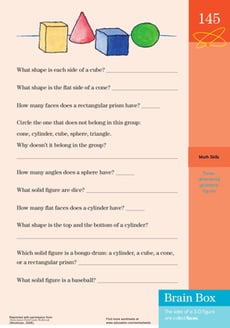
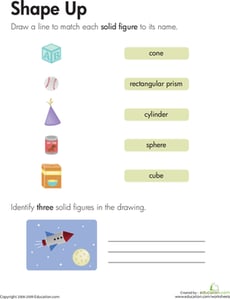
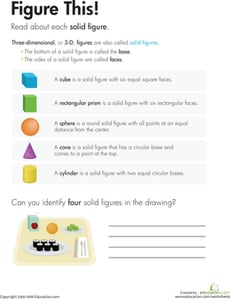
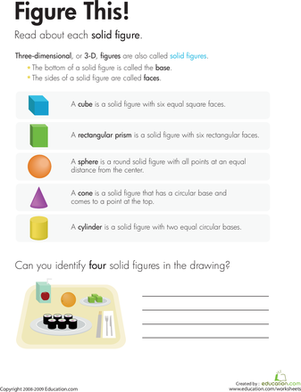
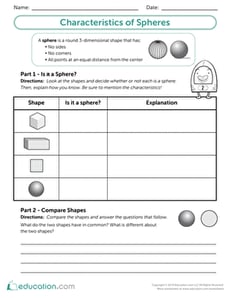
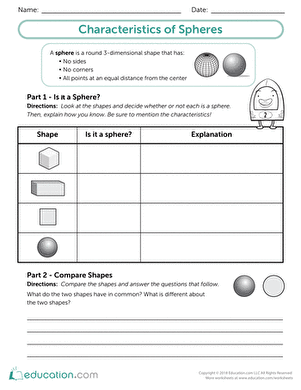
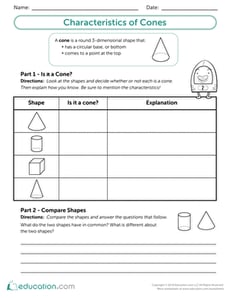
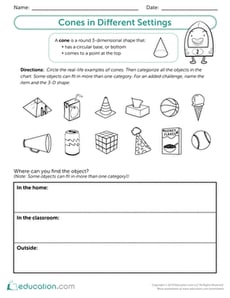
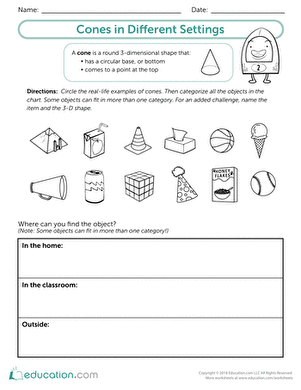
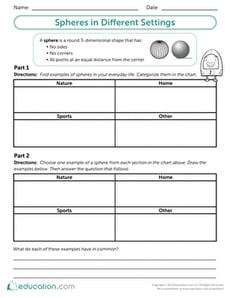
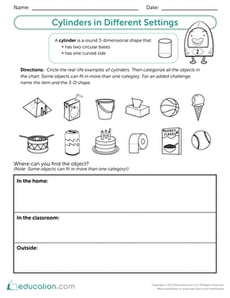
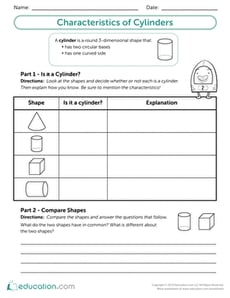
On Education.com, third-grade three-dimensional shapes worksheets provide students with opportunities to identify, compare, and classify various 3D objects, such as cubes, spheres, cones, and cylinders. These materials help young learners develop spatial awareness and a strong foundation in geometry by engaging them in hands-on learning activities and exercises tailored to their grade level.
Explore Educational.com’s collection of printable PDF worksheets, interactive activities, and lesson plans focused on three-dimensional shapes. These resources encourage practical understanding by combining visual recognition, shape measurement, and real-world applications, promoting both critical thinking and problem-solving skills.
Designed for educators and parents, these 3rd grade three-dimensional shapes worksheets make teaching geometry engaging and accessible. They save time by providing ready-to-use materials that reinforce classroom concepts, support homework assignments, or facilitate at-home learning in a structured, educational manner.
Explore Educational.com’s collection of printable PDF worksheets, interactive activities, and lesson plans focused on three-dimensional shapes. These resources encourage practical understanding by combining visual recognition, shape measurement, and real-world applications, promoting both critical thinking and problem-solving skills.
Designed for educators and parents, these 3rd grade three-dimensional shapes worksheets make teaching geometry engaging and accessible. They save time by providing ready-to-use materials that reinforce classroom concepts, support homework assignments, or facilitate at-home learning in a structured, educational manner.