
Subtopics:
4th Grade Measuring Angles Interactive Worksheets



About 4th Grade Measuring Angles Interactive Worksheets
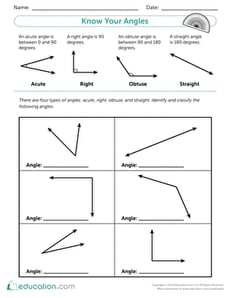
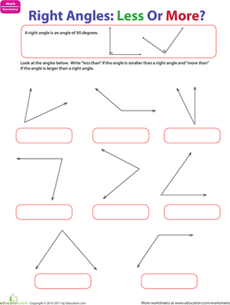
On Education.com, fourth-grade measuring angles interactive worksheets offer digital activities that help students practice using protractors to measure and classify angles. These materials include exercises where learners measure angles to 0 degrees, identify right, acute, and obtuse angles, and draw angles with precision. The worksheets are designed to build foundational geometry skills and provide hands-on learning with options for both printable and digital formats.
Suitable for classroom or homework use, these resources include engaging worksheets, online interactive activities, and printable practice pages. Teachers and parents can access materials that reinforce angle measurement concepts, aid in skill development, and promote confidence in geometry. Educators can tailor lessons or assign practice to support wider math curricula, while students enjoy structured guidance to enhance their math proficiency.
By browsing on Education.com, parents and teachers can discover a variety of geometry resources that make angle measurement engaging and accessible. These lessons encourage critical thinking, develop fine motor skills (through drawing angles), and provide instant feedback for guided improvement. Combining hands-on practice with digital tools makes learning physics practical and fun, ensuring children develop confidence in math through experience and repetition.
Suitable for classroom or homework use, these resources include engaging worksheets, online interactive activities, and printable practice pages. Teachers and parents can access materials that reinforce angle measurement concepts, aid in skill development, and promote confidence in geometry. Educators can tailor lessons or assign practice to support wider math curricula, while students enjoy structured guidance to enhance their math proficiency.
By browsing on Education.com, parents and teachers can discover a variety of geometry resources that make angle measurement engaging and accessible. These lessons encourage critical thinking, develop fine motor skills (through drawing angles), and provide instant feedback for guided improvement. Combining hands-on practice with digital tools makes learning physics practical and fun, ensuring children develop confidence in math through experience and repetition.