
5th Grade Classifying Two-Dimensional Shapes Exercises

About 5th Grade Classifying Two-dimensional Shapes Exercises
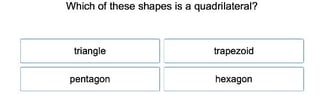
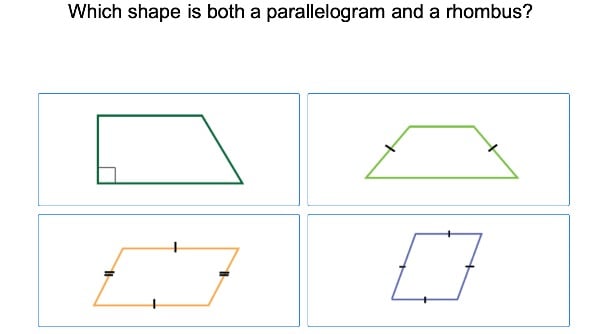
On Education.com, fifth-grade exercises for classifying 2D shapes focus on understanding attributes like number of sides, angles, and parallel or perpendicular lines. These activities help students organize polygons into hierarchies, such as triangles, quadrilaterals, and other shapes, based on their features. Learning to categorize shapes enhances geometric reasoning and supports broader math concepts.
This page offers a variety of resources including worksheets, printable exercises, and hands-on classroom activities designed to help students evaluate shape properties. These materials enable learners to practice identifying squares, rectangles, tributes, trapezoids, and other polygons, reinforcing their understanding of shape attributes and classification methods. Combining visual analysis with interactive exercises makes geometry engaging and accessible.
Educators and parents can use these structured exercises to reinforce shape recognition, measure student progress, and prepare for geometry lessons. Interactive worksheets and class projects develop analytical thinking while making learning geometry practical and fun. By incorporating these resources into lessons or homework, learners gain confidence in recognizing and classifying 2D shapes effectively.
This page offers a variety of resources including worksheets, printable exercises, and hands-on classroom activities designed to help students evaluate shape properties. These materials enable learners to practice identifying squares, rectangles, tributes, trapezoids, and other polygons, reinforcing their understanding of shape attributes and classification methods. Combining visual analysis with interactive exercises makes geometry engaging and accessible.
Educators and parents can use these structured exercises to reinforce shape recognition, measure student progress, and prepare for geometry lessons. Interactive worksheets and class projects develop analytical thinking while making learning geometry practical and fun. By incorporating these resources into lessons or homework, learners gain confidence in recognizing and classifying 2D shapes effectively.