6th Grade Ecosystems Resources

8 results
Science
✕6th Grade
✕8 results
6th Grade Ecosystems Resources
8 results
Science
✕6th Grade
✕8 results







About 6th Grade Ecosystems Resources
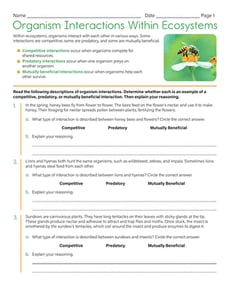
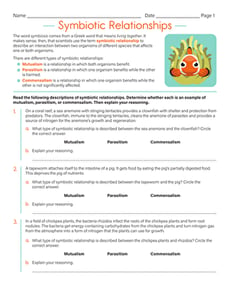
On Education.com, sixth-grade ecosystems resources include printable worksheets, interactive games, and lesson plans that introduce students to the basic concepts of ecosystems, food webs, and environmental interactions. These materials help young learners understand how organisms interact within their environments and the roles various species play in maintaining ecological balance. Educators and parents can use these resources to build foundational science skills and encourage curiosity about nature.
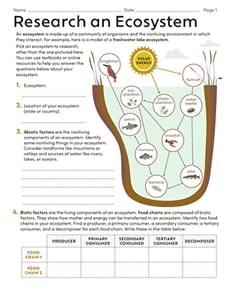
Explore a variety of resources on Education.com such as digital simulations, charts illustrating predator-prey relationships, and worksheets on abiotic and biotic factors. These materials provide structured activities that reinforce key ecological concepts while making learning engaging and accessible. Critical thinking, observation, and classification skills are integrated into lessons, supporting broad scientific literacy.
Practitioners can apply these resources in engaging classroom experiments, science center activities, or at-home projects like outdoor explorations or classroom debates on conservation. Using ready-made materials reduces preparation time, ensures consistency in teaching science standards, and offers structured ways to explore complex ecological systems while maintaining student interest.
Explore a variety of resources on Education.com such as digital simulations, charts illustrating predator-prey relationships, and worksheets on abiotic and biotic factors. These materials provide structured activities that reinforce key ecological concepts while making learning engaging and accessible. Critical thinking, observation, and classification skills are integrated into lessons, supporting broad scientific literacy.
Practitioners can apply these resources in engaging classroom experiments, science center activities, or at-home projects like outdoor explorations or classroom debates on conservation. Using ready-made materials reduces preparation time, ensures consistency in teaching science standards, and offers structured ways to explore complex ecological systems while maintaining student interest.