
7th Grade Area of Squares and Rectangles Resources

About 7th Grade Area Of Squares And Rectangles Resources
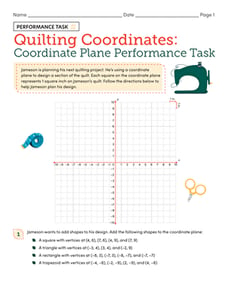
On Education.com, the 7th grade area of squares and rectangles resources include worksheets, printable activities, interactive games, and lesson plans that help students understand the formula for area ($A=l\times w$), including applications to real-world problems. These teaching materials support students in distinguishing between area and perimeter while applying geometric concepts. Educators and parents can access structured exercises that build foundational skills and encourage critical thinking.
The 7th grade resources provide a variety of formats such as practice worksheets, digital simulations, and interactive quizzes that reinforce learning and engagement. Students can explore exercises that challenge them to calculate the area of squares and rectangles, compare geometric measurements, and solve multi-step problems. Materials are designed to enhance mathematical understanding and prepare learners for more advanced geometry concepts.
Using these resources enables educators and parents to save time by providing ready-made activities that align with educational standards. The materials guide students through hands-on practice, encourage problem-solving skills, and promote confidence in geometry. By integrating fun and interactive lessons, learners stay motivated while mastering fundamental geometric principles.
The 7th grade resources provide a variety of formats such as practice worksheets, digital simulations, and interactive quizzes that reinforce learning and engagement. Students can explore exercises that challenge them to calculate the area of squares and rectangles, compare geometric measurements, and solve multi-step problems. Materials are designed to enhance mathematical understanding and prepare learners for more advanced geometry concepts.
Using these resources enables educators and parents to save time by providing ready-made activities that align with educational standards. The materials guide students through hands-on practice, encourage problem-solving skills, and promote confidence in geometry. By integrating fun and interactive lessons, learners stay motivated while mastering fundamental geometric principles.