
7th Grade Ecosystems Resources







About 7th Grade Ecosystems Resources
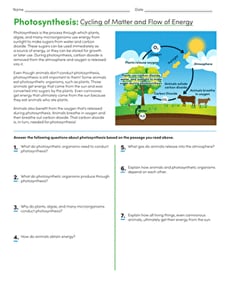
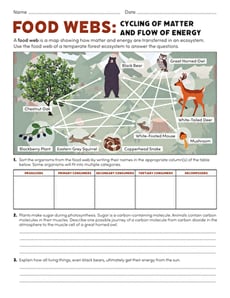
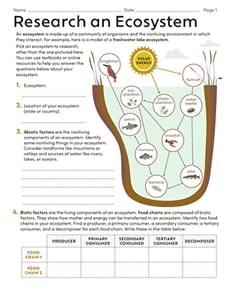
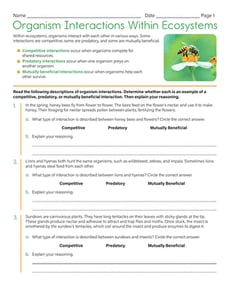
On Education.com, seventh grade ecosystems resources provide students and teachers with access to worksheets, interactive lessons, and diagramming activities that explore ecosystems, food webs, biotic and abiotic factors, and energy flow. These materials help organize complex scientific concepts into understandable segments suitable for middle school learners. Educators can find curriculum-aligned resources that deliver structured practice through printable worksheets and guided research projects. Parents can use these tools to reinforce classroom learning at home, fostering curiosity and critical thinking about the environment.
An extensive collection of digital resources on Education.com supports learning about ecosystems by offering lesson plans, interactive simulations, and assessments. These materials explore topics such as biodiversity, adaptations, and human impacts on the environment, providing a comprehensive approach to studying ecological systems. Materials include models, label-the-diagram exercises, and interactive quizzes, allowing students to engage with science standards in a hands-on, practical way.
Using these resources, educators and parents can save preparation time while providing accessible, engaging activities that spell out ecological principles for middle school students. The cluster of lesson plans, worksheets, and interactive tools helps students connect scientific concepts to real-world applications, enhancing understanding and retention. Students gain critical thinking skills by analyzing how organisms interact within ecosystems and recognizing the balance that sustains life on Earth.
An extensive collection of digital resources on Education.com supports learning about ecosystems by offering lesson plans, interactive simulations, and assessments. These materials explore topics such as biodiversity, adaptations, and human impacts on the environment, providing a comprehensive approach to studying ecological systems. Materials include models, label-the-diagram exercises, and interactive quizzes, allowing students to engage with science standards in a hands-on, practical way.
Using these resources, educators and parents can save preparation time while providing accessible, engaging activities that spell out ecological principles for middle school students. The cluster of lesson plans, worksheets, and interactive tools helps students connect scientific concepts to real-world applications, enhancing understanding and retention. Students gain critical thinking skills by analyzing how organisms interact within ecosystems and recognizing the balance that sustains life on Earth.