Offline Educational 1st Grade Spring Addition Fact Fluency Games

Subtopics:
Offline Educational 1st Grade Spring Addition Fact Fluency Games
3 results
Math
✕1st Grade
✕Offline Games
✕Spring
✕3 results
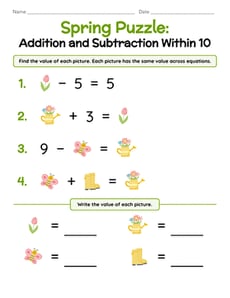

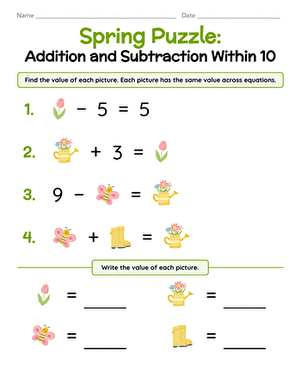
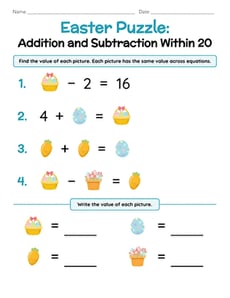
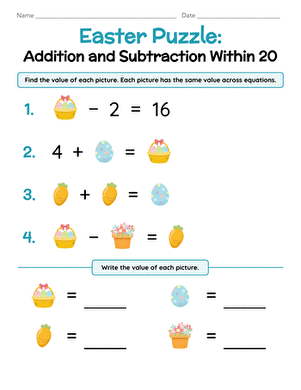


About Offline Educational 1st Grade Spring Addition Fact Fluency Games
On Education.com, educators and parents can find a variety of math teaching resources, including printable worksheets, classroom activities, and digital exercises. Among these are addition fact fluency games designed to help first-grade students practice number combinations while making learning fun and interactive. These resources encourage students to build confidence with basic addition and develop mental math skills through engaging gameplay.
Education.com provides structured lesson plans and practice worksheets that teach students to add numbers confidently, using strategies like counting on, doubles, and making ten. Activities such as timed quizzes, missing addends, and matching games allow children to reinforce addition facts in a supportive environment. These resources make it easy to both teach addition and track students' progress over time.
Educators and parents can use these addition fact fluency games and worksheets during classroom instruction, homeschool lessons, or practice at home. The resources save planning time by offering ready-to-use activities that promote skill mastery while keeping children motivated and engaged. Learning becomes more interactive, social, and ultimately more effective when students practice addition through hands-on games and structured exercises.
Education.com provides structured lesson plans and practice worksheets that teach students to add numbers confidently, using strategies like counting on, doubles, and making ten. Activities such as timed quizzes, missing addends, and matching games allow children to reinforce addition facts in a supportive environment. These resources make it easy to both teach addition and track students' progress over time.
Educators and parents can use these addition fact fluency games and worksheets during classroom instruction, homeschool lessons, or practice at home. The resources save planning time by offering ready-to-use activities that promote skill mastery while keeping children motivated and engaged. Learning becomes more interactive, social, and ultimately more effective when students practice addition through hands-on games and structured exercises.