Kindergarten Coloring Composing Two-Dimensional Shapes Worksheets

3 results
Math
✕Kindergarten
✕Worksheets
✕Coloring
✕3 results
Kindergarten Coloring Composing Two-Dimensional Shapes Worksheets
3 results
Math
✕Kindergarten
✕Worksheets
✕Coloring
✕3 results



About Kindergarten Coloring Composing Two-dimensional Shapes Worksheets
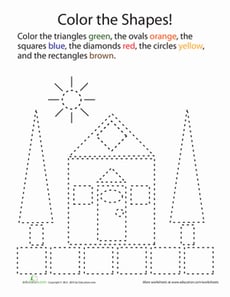
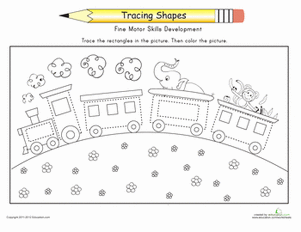
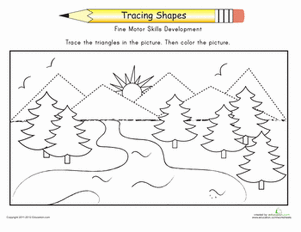
On Education.com, parents and teachers can access a variety of worksheets designed to help young children learn about geometry by combining basic shapes such as circles, squares, and triangles to create new images. These activities include tracing, coloring, and cut-and-paste exercises that reinforce recognition, identification, and creation of shapes while making learning fun and engaging. This collection provides structured lessons to support early math readiness and creative exploration.
The site offers digital templates and printable worksheets that help children develop fine motor skills, spatial awareness, and shape differentiation through hands-on projects. The resources allow educators and parents to incorporate shape hunts, pattern tracing, and engaging crafts into learning routines. With accessible and structured activities, children build foundational geometry skills while fostering creativity and confidence.
Applying these worksheets at home or in the classroom supplies children with age-appropriate tools to explore shapes, practice pattern-making, and establish a strong geometry background. Educators can easily coordinate lesson plans that combine shape recognition with artistic expression. Parents and teachers can use these resources to enhance learning, encourage hands-on practice, and make early math education enjoyable.
The site offers digital templates and printable worksheets that help children develop fine motor skills, spatial awareness, and shape differentiation through hands-on projects. The resources allow educators and parents to incorporate shape hunts, pattern tracing, and engaging crafts into learning routines. With accessible and structured activities, children build foundational geometry skills while fostering creativity and confidence.
Applying these worksheets at home or in the classroom supplies children with age-appropriate tools to explore shapes, practice pattern-making, and establish a strong geometry background. Educators can easily coordinate lesson plans that combine shape recognition with artistic expression. Parents and teachers can use these resources to enhance learning, encourage hands-on practice, and make early math education enjoyable.