
Kindergarten Comparing Size Interactive Worksheets


About Kindergarten Comparing Size Interactive Worksheets
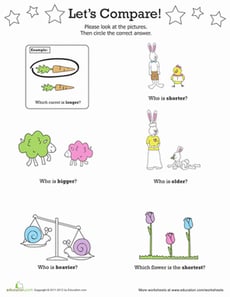
On Education.com, carefully arranged worksheets and interactive activities make it easy for parents and teachers to help young learners explore size comparison concepts. These educational resources support early math skills by providing engaging exercises that teach children to identify small, big, longer, shorter, and other size relationships. Through hands-on activities, children develop critical thinking and observational abilities while having fun.
This page offers a variety of kindergarten comparing size worksheets, including printable exercises, interactive digital sheets, and structured lesson plans designed to reinforce size discrimination. These resources provide age-appropriate content that helps young learners recognize size differences, compare objects, and understand measurement concepts. Using these materials makes teaching foundational math skills enjoyable and accessible, ensuring children build confidence with numbers and shapes.
Educators and parents can use these worksheets to create themed learning experiences, track progress, and provide interactive challenges that encourage exploration and practice. With step-by-step activities tailored to kindergarten learners, these materials support early education goals by promoting observational skills, classification abilities, and an understanding of spatial relationships.
This page offers a variety of kindergarten comparing size worksheets, including printable exercises, interactive digital sheets, and structured lesson plans designed to reinforce size discrimination. These resources provide age-appropriate content that helps young learners recognize size differences, compare objects, and understand measurement concepts. Using these materials makes teaching foundational math skills enjoyable and accessible, ensuring children build confidence with numbers and shapes.
Educators and parents can use these worksheets to create themed learning experiences, track progress, and provide interactive challenges that encourage exploration and practice. With step-by-step activities tailored to kindergarten learners, these materials support early education goals by promoting observational skills, classification abilities, and an understanding of spatial relationships.