
Kindergarten Geometry Interactive Worksheets








About Kindergarten Geometry Interactive Worksheets
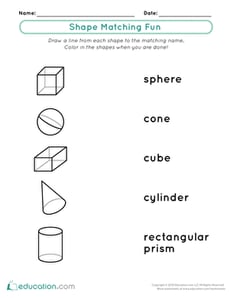
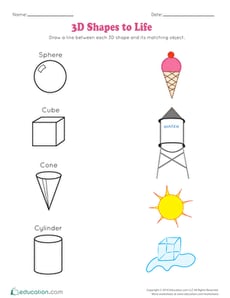
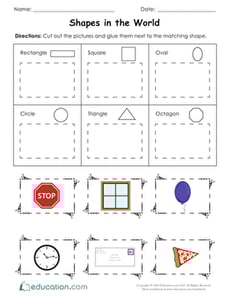
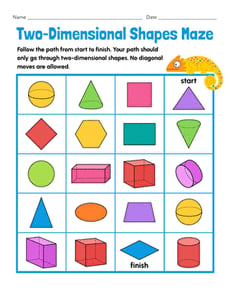
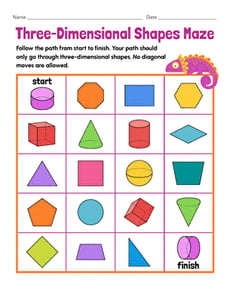
On Education.com, the Kindergarten Geometry Interactive Worksheets section offers a variety of engaging activities to help young learners recognize and explore shapes. These resources provide hands-on practice with circles, squares, triangles, and other fundamental geometric figures, making learning both fun and educational.
Educators and parents can access printable pages, interactive games, and lesson plans designed to enhance spatial awareness and shape identification for kindergarten students. These materials support foundational geometry skills essential for later math learning.
Using these worksheets at home or in the classroom saves planning time while providing structured, age-appropriate exercises. Students can develop observation skills and strengthen visual reasoning through shape matching, tracing, and identification activities.
Educators and parents can access printable pages, interactive games, and lesson plans designed to enhance spatial awareness and shape identification for kindergarten students. These materials support foundational geometry skills essential for later math learning.
Using these worksheets at home or in the classroom saves planning time while providing structured, age-appropriate exercises. Students can develop observation skills and strengthen visual reasoning through shape matching, tracing, and identification activities.