Kindergarten Coloring Dot to Dot Math Resources

Subtopics:
Kindergarten Coloring Dot to Dot Math Resources
6 results
Math
✕Kindergarten
✕Dot to Dot
✕Coloring
✕6 results




About Kindergarten Dot To Dot Coloring Math Resources
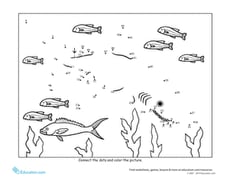
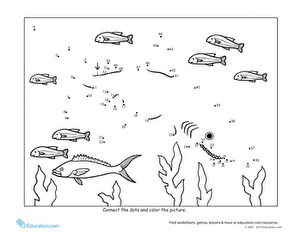
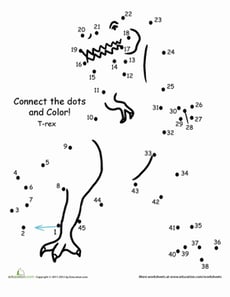
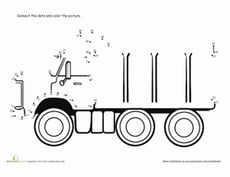
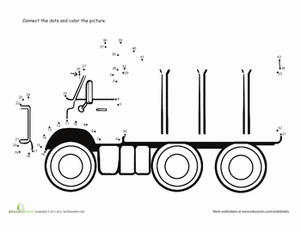
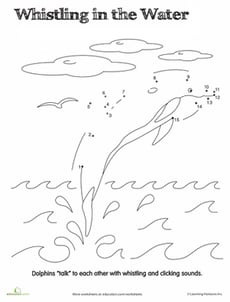
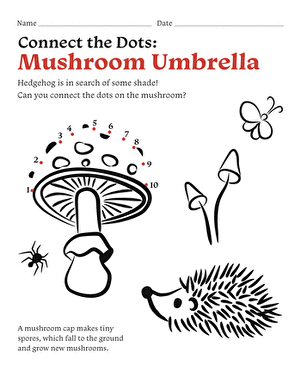
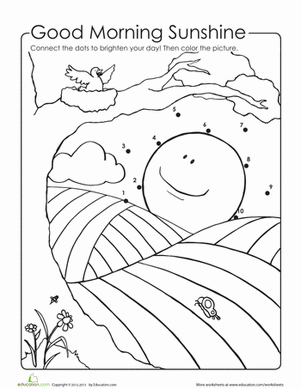
On Education.com, the Kindergarten Dot to Dot Coloring Math Resources page provides printable dot-to-dot activities and coloring worksheets that help young learners develop number recognition, counting skills, and fine motor coordination. These resources introduce foundational math concepts in a fun, engaging way, encouraging early positive experiences with numbers and counting. Each activity is designed to enhance hand-eye coordination while allowing children to explore patterns and spatial awareness through coloring and salutes.
This page offers a variety of materials, including skip counting exercises, shape traces, and numbered connect-the-dots worksheets. Educators and parents can use these resources in classroom lesson plans or at-home practice to support early math education, reinforce classroom skills, or provide engaging activities for young children. The structured, hands-on content makes learning interactive and enjoyable while supporting foundational mathematics.
Taking advantage of these resources saves time on lesson planning and provides children with ready-to-use activities that build counting, number sequencing, and artistic skills. By incorporating observation-based worksheets into daily routines, young learners can strengthen concentration and creativity while practicing math concepts in an age-appropriate context.
This page offers a variety of materials, including skip counting exercises, shape traces, and numbered connect-the-dots worksheets. Educators and parents can use these resources in classroom lesson plans or at-home practice to support early math education, reinforce classroom skills, or provide engaging activities for young children. The structured, hands-on content makes learning interactive and enjoyable while supporting foundational mathematics.
Taking advantage of these resources saves time on lesson planning and provides children with ready-to-use activities that build counting, number sequencing, and artistic skills. By incorporating observation-based worksheets into daily routines, young learners can strengthen concentration and creativity while practicing math concepts in an age-appropriate context.