Preschool Ending Punctuation Resources

3 results
English Language Arts
✕Pre-K
✕3 results
Preschool Ending Punctuation Resources
3 results
English Language Arts
✕Pre-K
✕3 results



About Preschool Ending Punctuation Resources
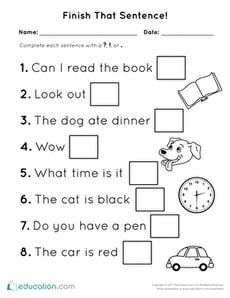
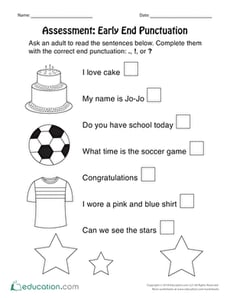
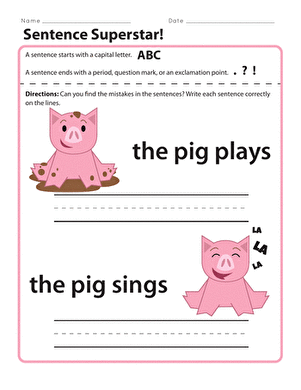
On Education.com, preschool ending punctuation resources include worksheets and printable activities designed to help young learners recognize and properly use punctuation marks at the end of sentences. These lessons support early writing skills and pave the way for advanced grammar understanding. The materials provide practice in identifying periods, question marks, and exclamation points in age-appropriate contexts. Educators and parents can use these resources to reinforce classroom lessons or supplement at-home learning.
This collection features organized teaching materials such as worksheets, digital exercises, and sentence-building activities focused on reviewing and practicing punctuation. Each resource is crafted to guide preschoolers in spotting punctuation marks, applying correct usage, and developing foundational reading and writing skills. By engaging with these activities, children gain confidence in forming complete sentences which contribute to overall literacy development. LA rural educators or parents can access versatile tools to enhance language learning.
Browse through preschool ending punctuation resources on Education.com to access educator-tested worksheets and printable exercises. These teaching materials provide structured practice that helps children differentiate between sentence-ending punctuation options. Using visual prompts and age-appropriate examples, learners strengthen their writing foundation and meet curriculum standards. Early educators can incorporate these resources into daily lessons, while parents can provide enjoyable and structured writing practice at home.
This collection features organized teaching materials such as worksheets, digital exercises, and sentence-building activities focused on reviewing and practicing punctuation. Each resource is crafted to guide preschoolers in spotting punctuation marks, applying correct usage, and developing foundational reading and writing skills. By engaging with these activities, children gain confidence in forming complete sentences which contribute to overall literacy development. LA rural educators or parents can access versatile tools to enhance language learning.
Browse through preschool ending punctuation resources on Education.com to access educator-tested worksheets and printable exercises. These teaching materials provide structured practice that helps children differentiate between sentence-ending punctuation options. Using visual prompts and age-appropriate examples, learners strengthen their writing foundation and meet curriculum standards. Early educators can incorporate these resources into daily lessons, while parents can provide enjoyable and structured writing practice at home.