
Preschool Comparing Size Workbooks


About Preschool Comparing Size Worksheets
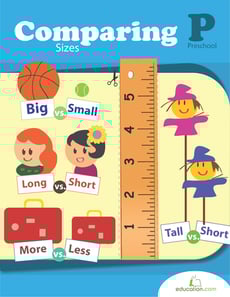
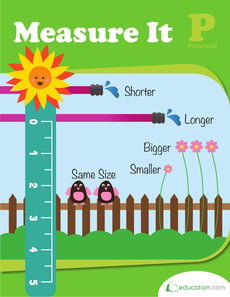
On Education.com, preschool comparing size worksheets provide children with hands-on activities to explore size differences, such as identifying larger or smaller objects. These activities help develop early math skills, spatial awareness, and visual discrimination. Parents and teachers can access printable pages that range from comparing shapes and objects to ordering items by size, fostering foundational mathematical understanding.
The site offers a variety of lessons and activities that include digital simulations, printable practice sheets, and interactive games focused on comparing sizes. These materials enable young learners to reinforce concepts through engaging exercises while applying real-world observation skills. Educators can incorporate these resources into classroom lessons, homework assignments, or homeschooling routines, providing structured practice for young children.
Using compare-and-contrast exercises helps children recognize differences and similarities, strengthening critical thinking. This supports diverse areas like pattern recognition, categorization, and scientific observation. Parents and educators can track progress over time and adjust activities to suit each child's developing abilities, ensuring a supportive and educational experience.
The site offers a variety of lessons and activities that include digital simulations, printable practice sheets, and interactive games focused on comparing sizes. These materials enable young learners to reinforce concepts through engaging exercises while applying real-world observation skills. Educators can incorporate these resources into classroom lessons, homework assignments, or homeschooling routines, providing structured practice for young children.
Using compare-and-contrast exercises helps children recognize differences and similarities, strengthening critical thinking. This supports diverse areas like pattern recognition, categorization, and scientific observation. Parents and educators can track progress over time and adjust activities to suit each child's developing abilities, ensuring a supportive and educational experience.