
Subtopics:
Fiction Problem and Solution Resources























About Fiction Problem And Solution Resources
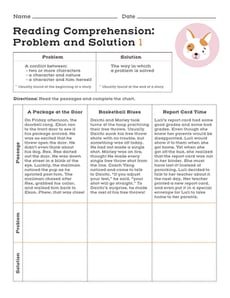
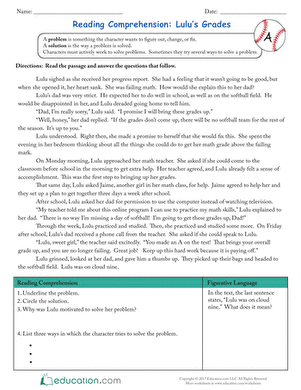
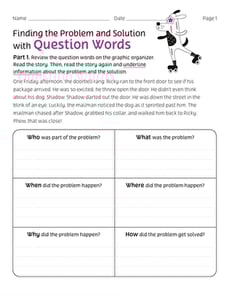
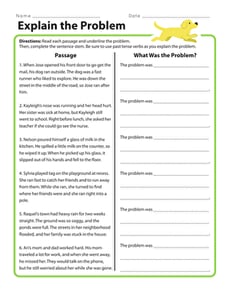
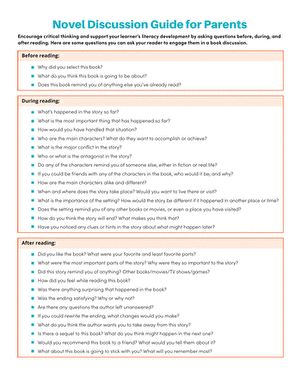
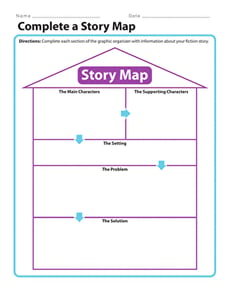
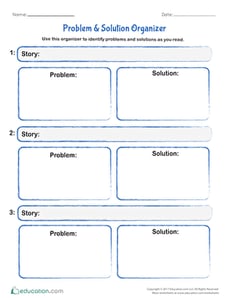
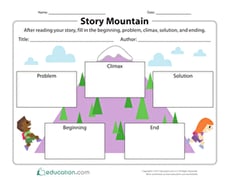
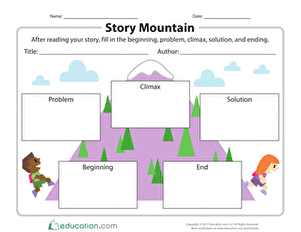
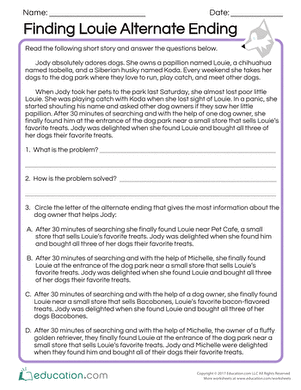
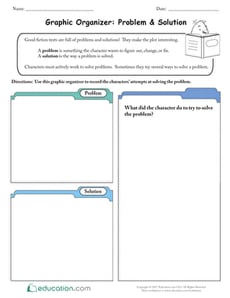
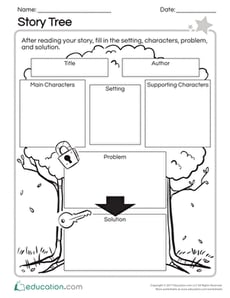
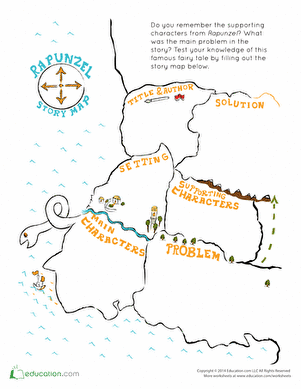
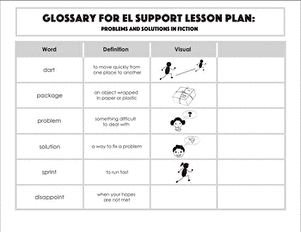
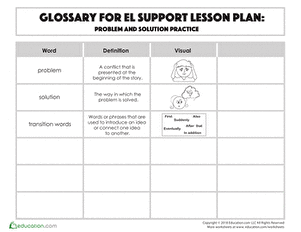
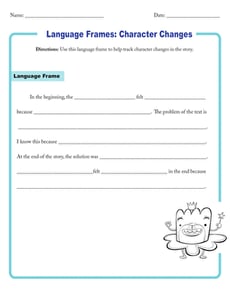
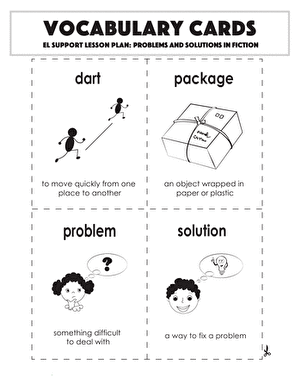
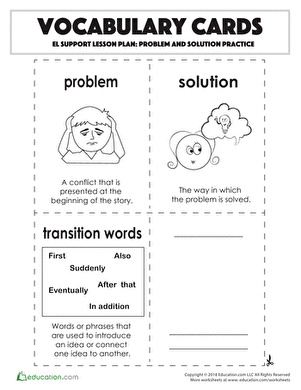
On Education.com, fiction problem and solution resources guide students through identifying, analyzing, and understanding how characters and stories resolve conflicts. These materials include worksheets, activity pages, and lesson plans that focus on central story elements like character challenges, plot development, and resolution strategies, providing students with tools to enhance reading comprehension and critical thinking skills.
This page offers character analysis worksheets, printable story problems, and digital exercises that assist students in recognizing problem-solving patterns in fiction. Resources are designed for builders of foundational reading skills and study aids for practicing how characters behave and resolve conflicts, building momentum toward more complex literacy and literature analysis topics.
Educators and parents can use these activities to help students independently recognize story conflicts, engage in strategic thinking, and write about how characters solve problems. This approach fosters interactive learning, supports standards-based literacy education, and encourages active reading, all while providing engaging and manageable problem-based practice.
This page offers character analysis worksheets, printable story problems, and digital exercises that assist students in recognizing problem-solving patterns in fiction. Resources are designed for builders of foundational reading skills and study aids for practicing how characters behave and resolve conflicts, building momentum toward more complex literacy and literature analysis topics.
Educators and parents can use these activities to help students independently recognize story conflicts, engage in strategic thinking, and write about how characters solve problems. This approach fosters interactive learning, supports standards-based literacy education, and encourages active reading, all while providing engaging and manageable problem-based practice.