Abbreviations Interactive Worksheets

9 results
English Language Arts
✕Interactive Worksheets
✕9 results
Abbreviations Interactive Worksheets
9 results
English Language Arts
✕Interactive Worksheets
✕9 results





About Abbreviations Interactive Worksheets
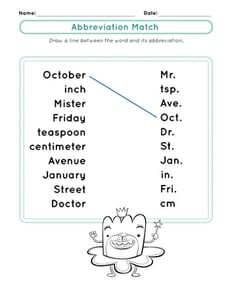
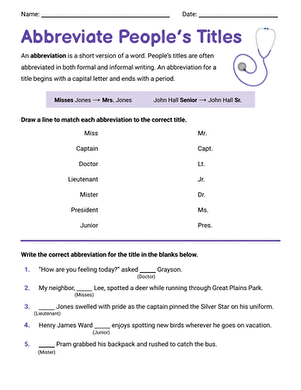
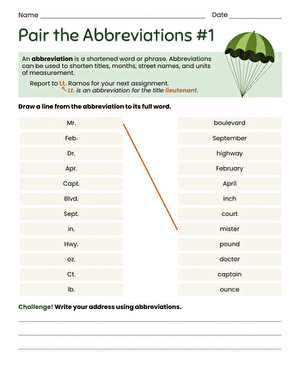
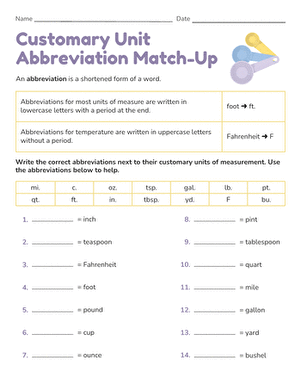
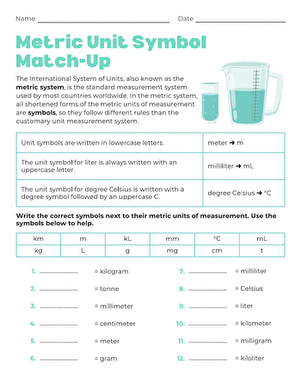
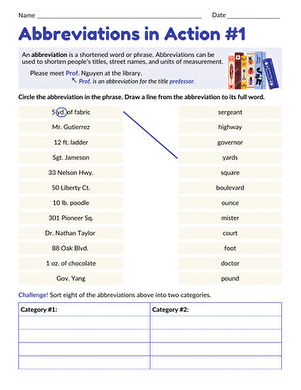
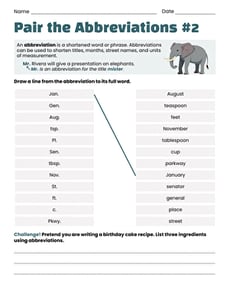
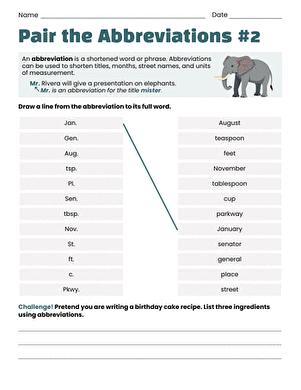
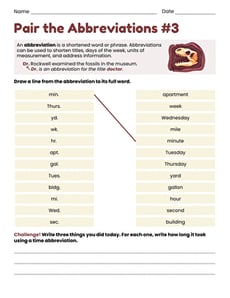
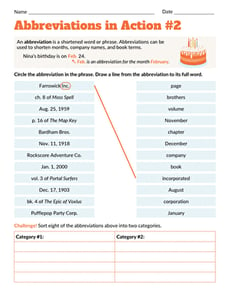
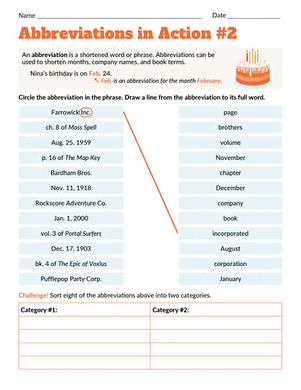
On Education.com, Abbreviations Interactive Worksheets provide engaging materials for students to practice and learn how to recognize and interpret abbreviations. These worksheets include exercises where learners match abbreviations to their full forms or expand abbreviations within sentences, supporting reading comprehension and vocabulary development. Educators and parents can access printable activities that reinforce understanding of common, technical, and scientific abbreviations across subjects.
Explore the page for Abbreviations Interactive Worksheets to find materials that combine practice with fun, interactive elements. These worksheets can include crosswords, matching games, sentence expansions, and fill-in-the-blanks to enhance learning and retention. Each activity provides clear instructions and scaffolding suited for different grade levels, making practicing abbreviations approachable and rewarding.
Using Education.com’s Abbreviations Interactive Worksheets helps students gain confidence in decoding abbreviations, strengthen language skills, and apply knowledge across subjects. Teachers can incorporate these worksheets into lesson plans or classroom activities, while parents can provide focused practice at home. The ready-to-print, downloadable format ensures accessible and structured reinforcement of essential abbreviations.
Explore the page for Abbreviations Interactive Worksheets to find materials that combine practice with fun, interactive elements. These worksheets can include crosswords, matching games, sentence expansions, and fill-in-the-blanks to enhance learning and retention. Each activity provides clear instructions and scaffolding suited for different grade levels, making practicing abbreviations approachable and rewarding.
Using Education.com’s Abbreviations Interactive Worksheets helps students gain confidence in decoding abbreviations, strengthen language skills, and apply knowledge across subjects. Teachers can incorporate these worksheets into lesson plans or classroom activities, while parents can provide focused practice at home. The ready-to-print, downloadable format ensures accessible and structured reinforcement of essential abbreviations.