
Rhyming Lesson Plans
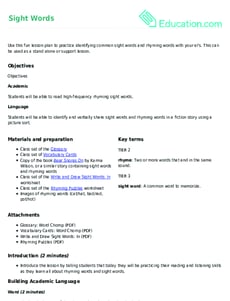

About Rhyming Lesson Plans
On Education.com, rhyming lesson plans provide structured activities that support phonemic awareness, musical literacy, and early reading skills. These resources often include printable worksheets, engaging exercises, and guided lesson plans that focus on teaching children to recognize, match, and generate words with similar ending sounds. Educators and parents can access a variety of lesson materials that incorporate nursery rhymes, singing games, and word-sorting activities designed for young learners.
Browse Education.com’s rhyming worksheets, printable games, and teacher-created lesson plans that make phonics instruction interactive and fun. These activities help students strengthen their ability to identify rhyming words, enhance alphabet recognition, and develop early reading comprehension by exploring familiar nursery rhymes and classic children’s songs. Every resource is designed to lay a solid foundation for literacy while encouraging creativity and confidence in young readers.
Teachers and parents can use these phonics activities to reinforce classroom lessons or provide additional practice at home. By integrating rhyming exercises into daily learning, Educators can support word recognition, phonemic awareness, and literacy fluency in an engaging, accessible way. These resources save time by offering ready-made teaching materials that promote learning through play while strengthening essential language skills.
Browse Education.com’s rhyming worksheets, printable games, and teacher-created lesson plans that make phonics instruction interactive and fun. These activities help students strengthen their ability to identify rhyming words, enhance alphabet recognition, and develop early reading comprehension by exploring familiar nursery rhymes and classic children’s songs. Every resource is designed to lay a solid foundation for literacy while encouraging creativity and confidence in young readers.
Teachers and parents can use these phonics activities to reinforce classroom lessons or provide additional practice at home. By integrating rhyming exercises into daily learning, Educators can support word recognition, phonemic awareness, and literacy fluency in an engaging, accessible way. These resources save time by offering ready-made teaching materials that promote learning through play while strengthening essential language skills.