
Offline Educational Life Science Games


















About Offline Educational Life Science Games
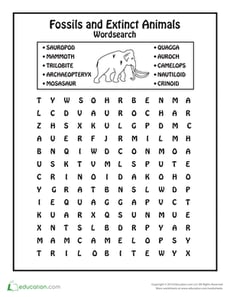
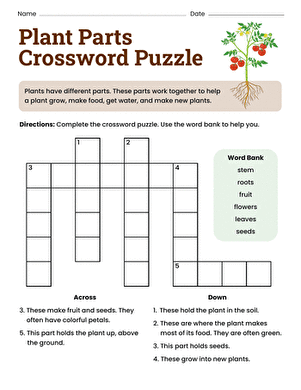
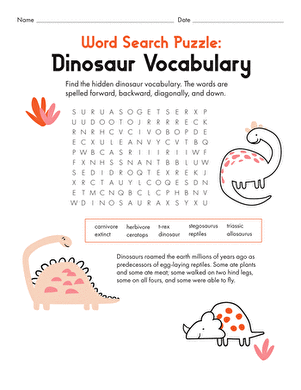
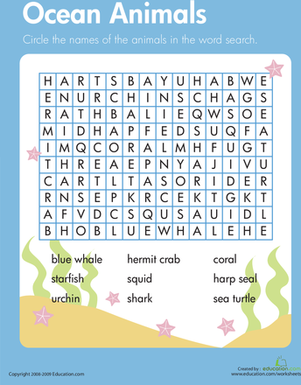
On Education.com, parents and teachers can explore a wide range of offline educational activities focused on life science, including printable worksheets, hands-on experiments, and engaging classroom games. These resources help children understand biological concepts such as animals, plant life, ecosystems, and human body functions in an interactive, tangible way. Such materials provide that students practice scientific skills while developing curiosity about living things outside the digital space.
This page on Education.com offers a collection of printable materials, lesson plans, and activity guides that support learners in conducting experiments, exploring plant and animal structures, and observing life cycles. Educators and parents can find resources designed to make complex biological concepts accessible and engaging. These resources foster hands-on learning experiences that strengthen observation and critical thinking skills.
Use these offline life science games and worksheets to create interactive lessons or family learning activities that promote exploration and curiosity about organisms, habitats, and ecosystems. Teachers can incorporate hands-on experiments and observation exercises into science units, while parents can extend structured learning beyond the classroom. These resources provide practical tools to support living science education in multiple settings.
This page on Education.com offers a collection of printable materials, lesson plans, and activity guides that support learners in conducting experiments, exploring plant and animal structures, and observing life cycles. Educators and parents can find resources designed to make complex biological concepts accessible and engaging. These resources foster hands-on learning experiences that strengthen observation and critical thinking skills.
Use these offline life science games and worksheets to create interactive lessons or family learning activities that promote exploration and curiosity about organisms, habitats, and ecosystems. Teachers can incorporate hands-on experiments and observation exercises into science units, while parents can extend structured learning beyond the classroom. These resources provide practical tools to support living science education in multiple settings.