
Subtopics:
Fiction Make Inferences Resources


























About Fiction Make Inferences Resources
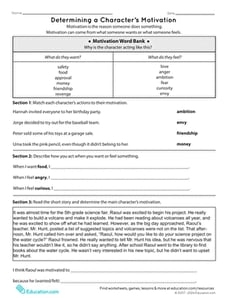
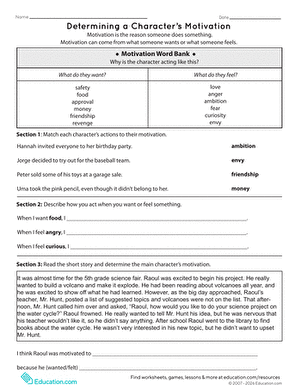
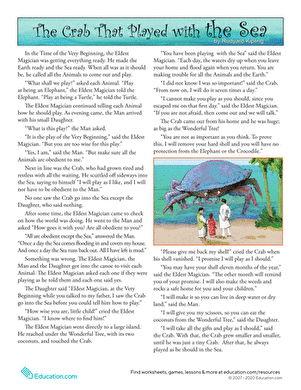
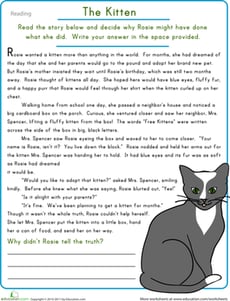
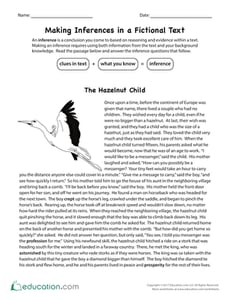
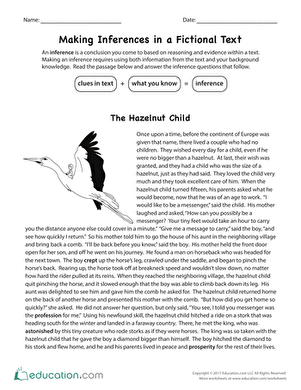
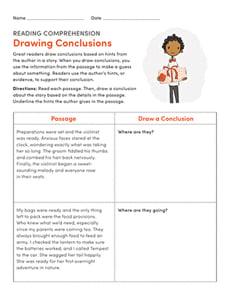
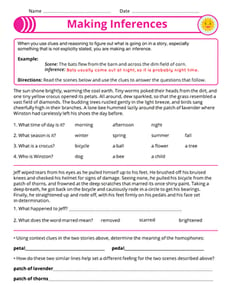
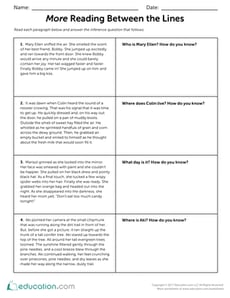
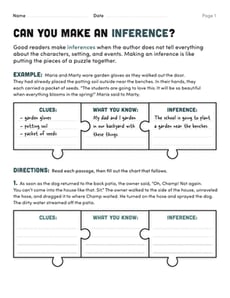
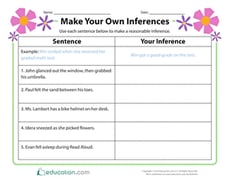
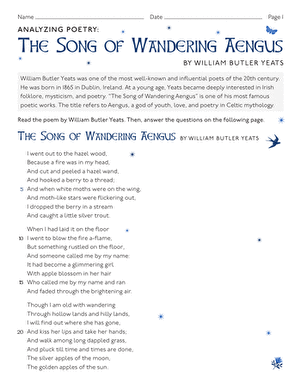
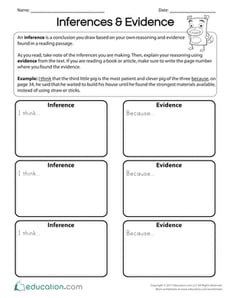
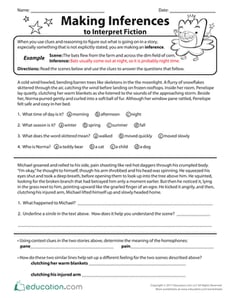
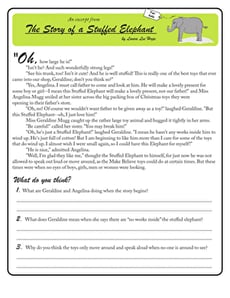
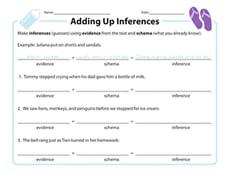
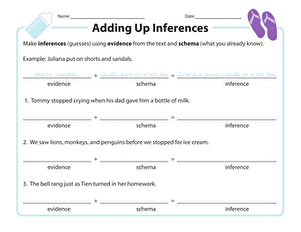
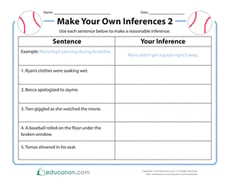
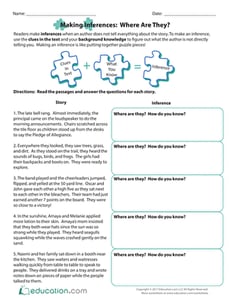
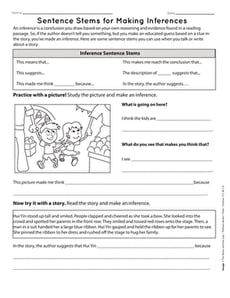
On Education.com, fiction make inferences resources include classroom activities, worksheets, and printable lesson plans that help students draw connections and understand story details beyond the text. These resources support reading comprehension, critical thinking, and analysis skills. Educators and parents can access a variety of materials designed for students to practice inferring character motivations, predict plot developments, and interpret story clues.
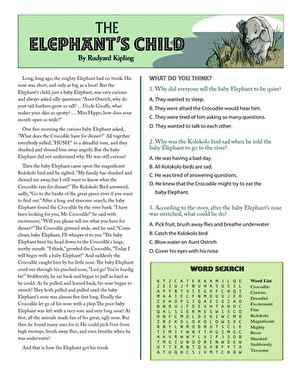
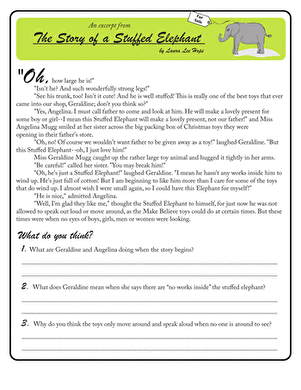
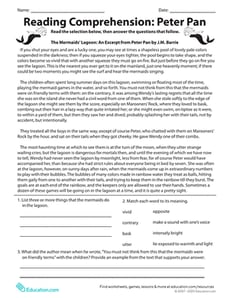
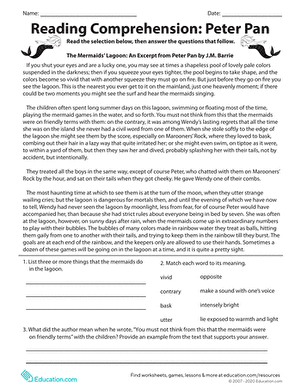
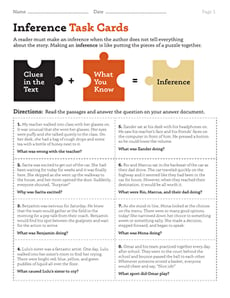
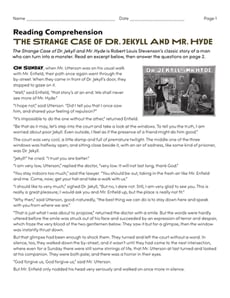
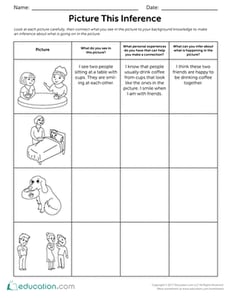
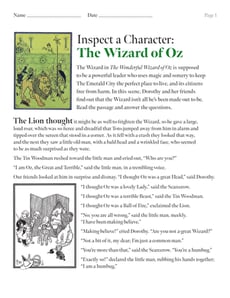
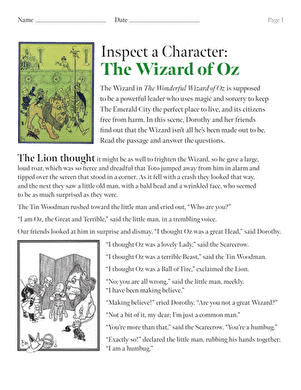
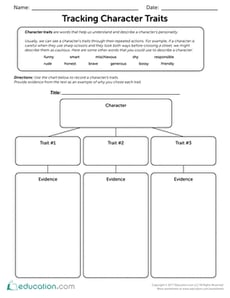
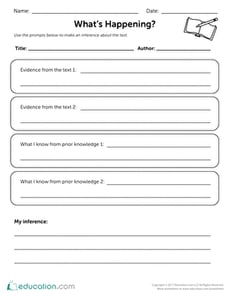
Fiction inference worksheets provide exercises such as character analysis essays, story-based task cards, and graphic organizers that encourage students to examine stories closely. These resources also include reading passages and questions that challenge students to make predictions, identify themes, and understand author intent. Using structured and guided activities, students enhance their ability to analyze narratives independently.
Educators and parents can utilize these materials to engage students in fun, interactive ways that reinforce comprehension skills. By practicing inference using worksheets and classroom resources, learners develop confidence in their ability to think critically, support ideas with evidence, and appreciate the depth of storytelling. These resources provide excellent tools for building key reading skills across all levels.
Fiction inference worksheets provide exercises such as character analysis essays, story-based task cards, and graphic organizers that encourage students to examine stories closely. These resources also include reading passages and questions that challenge students to make predictions, identify themes, and understand author intent. Using structured and guided activities, students enhance their ability to analyze narratives independently.
Educators and parents can utilize these materials to engage students in fun, interactive ways that reinforce comprehension skills. By practicing inference using worksheets and classroom resources, learners develop confidence in their ability to think critically, support ideas with evidence, and appreciate the depth of storytelling. These resources provide excellent tools for building key reading skills across all levels.