
Composing Three-Dimensional Shapes Resources
9 results
Math
✕Sort by:
9 results
Sort by:

About Composing Three-dimensional Shapes Resources
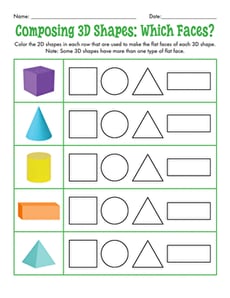
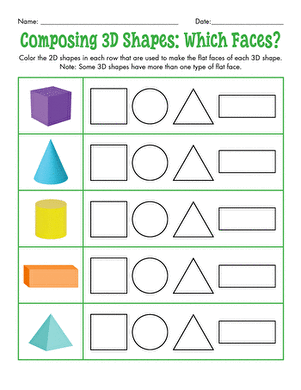
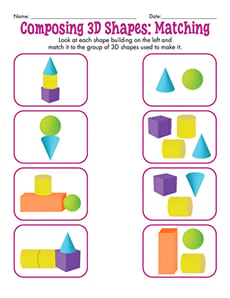
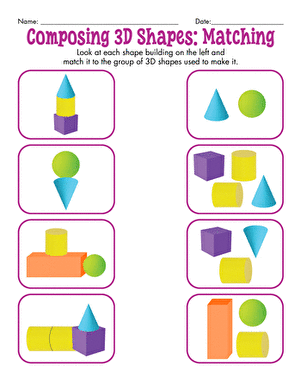
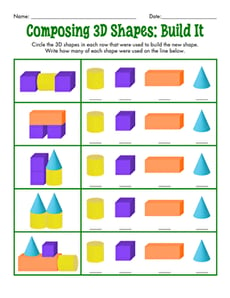
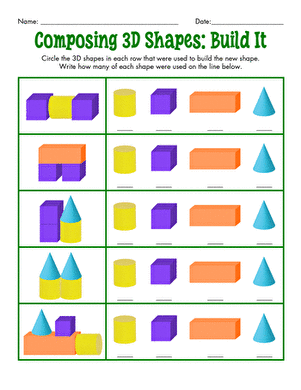
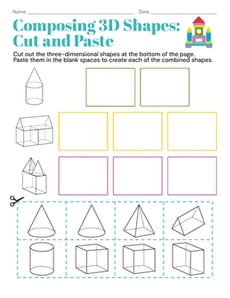
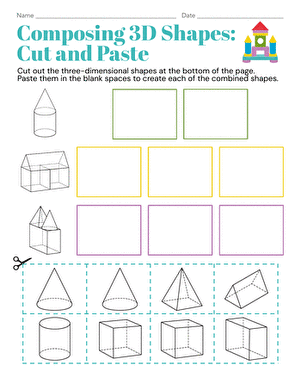
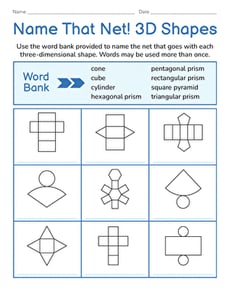
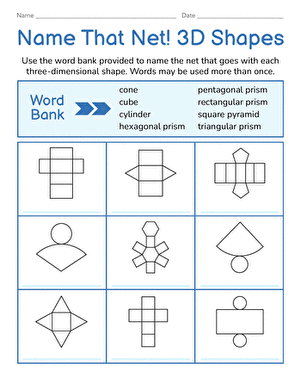
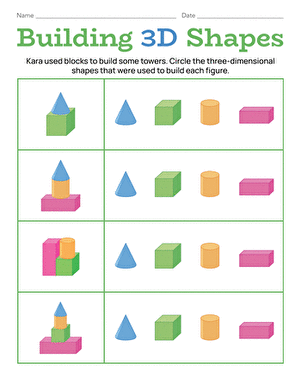
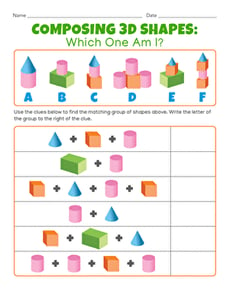
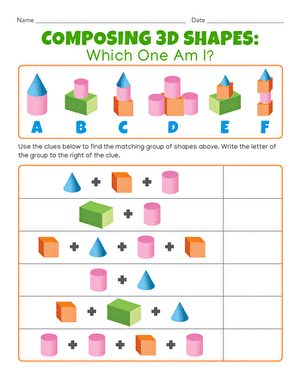
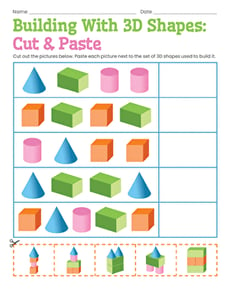
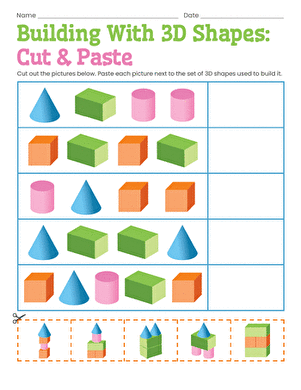
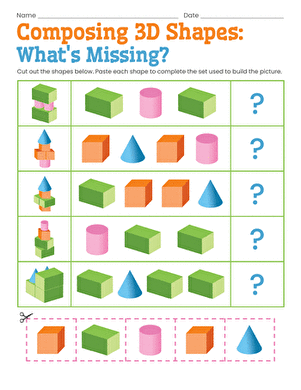
On Education.com, composing 3D shapes involves activities and materials that help learners understand the structure and properties of objects like cubes, spheres, cylinders, and cones. These resources introduce children to the fundamentals of geometry through hands-on exercises, interactive puzzles, and craft projects that encourage spatial reasoning and visualization. Workspace examples include printable worksheets, building templates, and exploring the use of connecting blocks to create complex structures.
The page offers a variety of digital tools and printable activities focused on combining basic shapes to form more intricate three-dimensional models. Resources such as pattern block exercises, shape-sorting games, and lesson plans foster creativity while reinforcing geometric concepts in an engaging manner. Parents and teachers can utilize these resources to support geometry learning at home or in the classroom.
Educators and parents can incorporate these activities into lesson plans or everyday play to enhance children’s understanding of geometric structures and pattern recognition. Using practical materials like LEGO blocks, playdough, or pattern blocks alongside printable worksheets makes abstract concepts tangible. These resources provide accessible and enjoyable ways for kids to explore, build, and deepen their comprehension of 3D shapes while supporting problem-solving and fine motor skills.
The page offers a variety of digital tools and printable activities focused on combining basic shapes to form more intricate three-dimensional models. Resources such as pattern block exercises, shape-sorting games, and lesson plans foster creativity while reinforcing geometric concepts in an engaging manner. Parents and teachers can utilize these resources to support geometry learning at home or in the classroom.
Educators and parents can incorporate these activities into lesson plans or everyday play to enhance children’s understanding of geometric structures and pattern recognition. Using practical materials like LEGO blocks, playdough, or pattern blocks alongside printable worksheets makes abstract concepts tangible. These resources provide accessible and enjoyable ways for kids to explore, build, and deepen their comprehension of 3D shapes while supporting problem-solving and fine motor skills.