
Subtopics:
Offline Educational Onomatopoeia Games







About Offline Educational Onomatopoeia Games
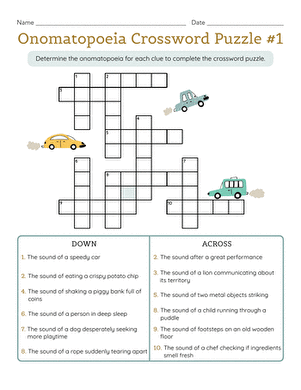
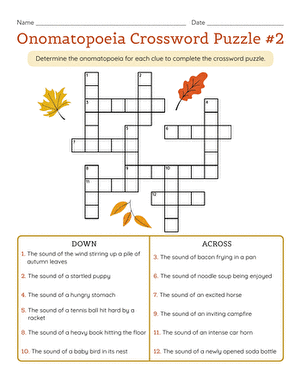
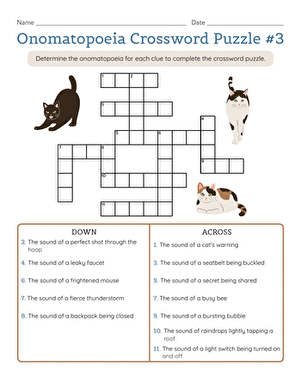
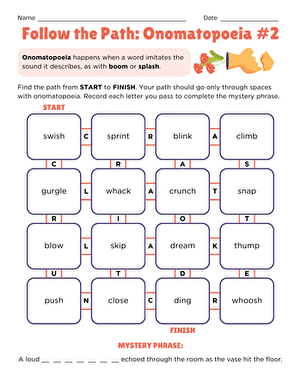
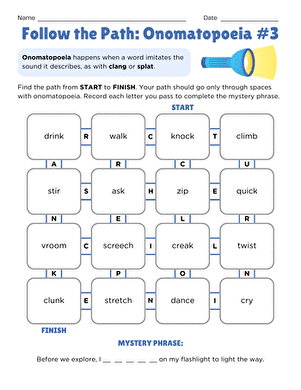
On Education.com, offline educational onomatopoeia games use printable cards, worksheets, and physical activities like charades, bingo, matching pairs, and scavenger hunts to teach sound words through play, often incorporating themes like animals or vehicles with popular formats like 'Spot It' or 'I Have, Who Has'. These activities are structured to help students recognize and pronounce onomatopoeic words while engaging in hands-on, interactive learning. Educators and parents can access ready-made resources to incorporate into classroom lessons or at-home practice, making learning a fun and immersive experience. These games also build on auditory discrimination, vocabulary expansion, and phonemic awareness.
Discover on Education.com a wide variety of sentimentally engaging, hands-on materials for teaching onomatopoeic words to elementary students. These include printable activity pages, interactive classroom kits, and worksheet collections designed to enhance listening skills and expand word recognition. Educators and parents can choose resources that serve as interactive teaching tools, classroom inspiration plans, or homework exercises, making it easy to turn learning into a collaborative and creative activity.
Explore on Education.com a collection of clear examples and ideas for classroom and at-home learning with onomatopoeic themed games, each built to develop sound recognition and phonetic awareness. These pages provide ready-to-use lesson plans, printable game materials, and hands-on activity guides that spark creativity, engage students, and reinforce classroom concepts. Whether focused on animal sounds, vehicle noises, or pop culture references, resources are designed to make practicing sound words both educational and enjoyable for elementary learners.
Discover on Education.com a wide variety of sentimentally engaging, hands-on materials for teaching onomatopoeic words to elementary students. These include printable activity pages, interactive classroom kits, and worksheet collections designed to enhance listening skills and expand word recognition. Educators and parents can choose resources that serve as interactive teaching tools, classroom inspiration plans, or homework exercises, making it easy to turn learning into a collaborative and creative activity.
Explore on Education.com a collection of clear examples and ideas for classroom and at-home learning with onomatopoeic themed games, each built to develop sound recognition and phonetic awareness. These pages provide ready-to-use lesson plans, printable game materials, and hands-on activity guides that spark creativity, engage students, and reinforce classroom concepts. Whether focused on animal sounds, vehicle noises, or pop culture references, resources are designed to make practicing sound words both educational and enjoyable for elementary learners.