
Offline Educational Plants Games



About Offline Educational Plants Games
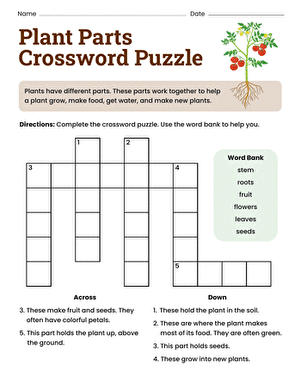
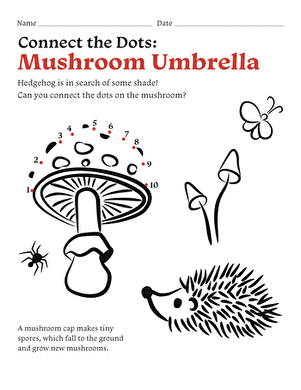
On Education.com, offline educational plant games include printable activities like scavenger hunts, puzzles, and coloring pages that help children learn about plant parts, growth, and biology. These materials support hands-on learning, encourage exploration, and make complex concepts accessible for young learners. By providing tangible resources, educators and parents can guide children through engaging explorations of plants and ecosystems.
The worksheet page offers printable resources for students to practice identifying plant anatomy, explore part functions, and connect to broader ecological concepts. These organized materials promote structured learning while allowing flexibility for classroom or at-home instruction. Supplementary guides, such as lesson plans and activity sets, provide teachers with classroom-ready tools that simplify lesson planning and enhance science instruction.
Using exploration-based activities and printable worksheets in classrooms or at home encourages hands-on engagement, reinforces learning, and sparks interest in the natural world. These resources make it easy to integrate plant science into science lessons, gardening projects, or book-based activities, providing educators and parents with resources to foster curiosity and understanding among young students.
The worksheet page offers printable resources for students to practice identifying plant anatomy, explore part functions, and connect to broader ecological concepts. These organized materials promote structured learning while allowing flexibility for classroom or at-home instruction. Supplementary guides, such as lesson plans and activity sets, provide teachers with classroom-ready tools that simplify lesson planning and enhance science instruction.
Using exploration-based activities and printable worksheets in classrooms or at home encourages hands-on engagement, reinforces learning, and sparks interest in the natural world. These resources make it easy to integrate plant science into science lessons, gardening projects, or book-based activities, providing educators and parents with resources to foster curiosity and understanding among young students.